For many NDIS participants, greater independence begins with learning practical skills that make everyday life easier, safer and more manageable. Disability living support can help participants strengthen routines, confidence and decision-making while working towards personal goals. When combined with the right NDIS life skills support, this approach can help people take a more active role in cooking, household tasks, budgeting, communication, transport and community participation.
What Is Disability Living Support?
Disability living support is a broad way of describing personalised assistance that helps a person with disability manage everyday activities and develop greater independence. Depending on a participant’s goals, needs and approved NDIS funding, support may focus on learning new skills, practising existing abilities or building confidence to complete daily tasks with less assistance over time.
Importantly, disability living support is not a single formal NDIS funding category. Instead, relevant supports may sit within different parts of an individual NDIS plan. The NDIS describes Capacity Building supports as supports that help participants build skills, do more for themselves and work towards their goals. Improved Daily Living can include assessments, training or therapies that build living skills, independence and community participation.
Therefore, participants should always check their individual plan, funding categories and support descriptions before using NDIS funding for a particular service.
How Does Disability Living Support Build Daily Living Skills?
Daily living skills are the practical abilities people use to manage routines at home and in the community. Disability living support can make skill development more manageable by breaking tasks into achievable steps and allowing participants to practise them in real-life situations.
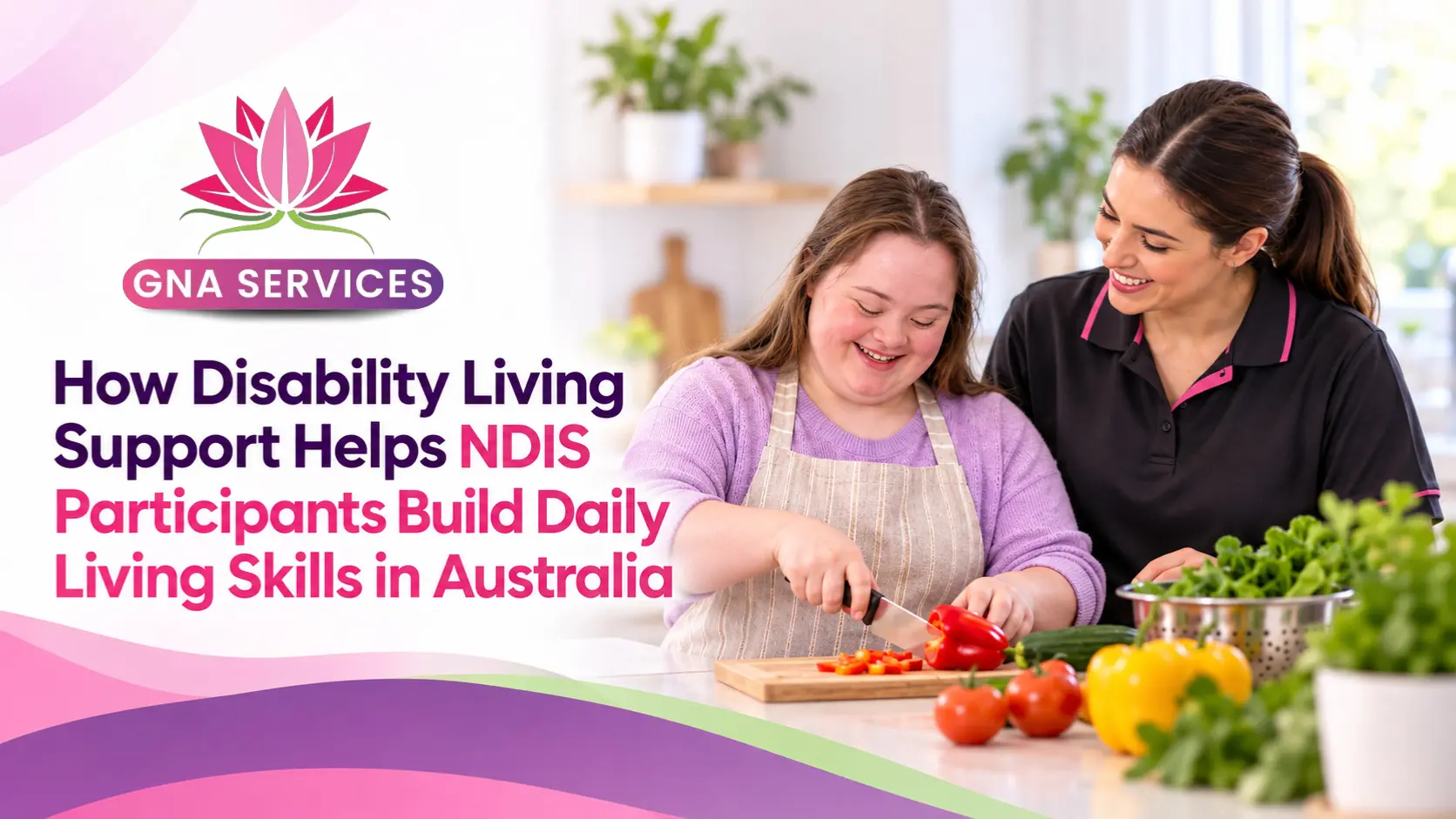
Rather than focusing only on completing a task for a participant, skill-building support can encourage participation in the task wherever appropriate. For example, a participant may learn how to plan a meal, create a shopping list, follow a simple recipe and safely prepare food. Over time, repeated practice may improve confidence and independence.
The right approach should remain person-centred. Participants have different abilities, preferences, cultural backgrounds, communication needs and goals, so support should be adapted rather than delivered as a one-size-fits-all program.
Everyday NDIS Life Skills That Can Support Greater Independence
Cooking and Meal Preparation
Preparing meals involves several skills, including planning, shopping, food safety, time management and using kitchen equipment. Through disability living support, participants may practise preparing simple meals, organising ingredients and following safe routines in the kitchen.
Building these abilities can support greater choice around food and daily routines. With consistent disability living support, participants may also feel more confident taking part in household responsibilities.
Cleaning and Household Organisation
Keeping a home organised can involve cleaning surfaces, washing clothes, changing bedding, storing belongings and following a regular household routine. NDIS life skills training can help participants learn these tasks step by step and develop systems that suit their abilities.
For some people, visual schedules, reminders or structured routines may make tasks easier to understand and repeat consistently. The NDIS also recognises learning daily care and life skills as a way participants may build greater independence.
Budgeting and Money Management
Managing money is another important part of everyday independence. Disability living support may help eligible participants practise creating a simple budget, understanding everyday expenses, comparing prices and keeping track of spending.
Depending on individual needs, skill development may also include learning how to use banking tools safely or understanding the difference between essential and optional spending.
Communication and Social Skills
Daily life often involves communicating with support workers, family members, businesses, employers and people in the community. Skill development can help participants practise expressing choices, asking questions, understanding instructions and communicating their needs.
These skills may also contribute to greater confidence in social and community settings and help participants become more actively involved in decisions affecting their everyday lives.
Public Transport and Community Access Skills
Using public transport independently can require route planning, reading timetables, recognising stops, using a travel card and knowing what to do when plans change. Where appropriate to a participant’s needs and goals, disability living support can help people practise these skills in a structured and supportive way.
Developing transport confidence may make it easier to attend appointments, education, work, social activities or community programs.
Why Person-Centred Skill Development Matters?
Effective NDIS support should be connected to the participant’s own goals rather than a generic checklist of tasks. Disability living support works best when the participant is actively involved in deciding which skills matter most to them and how they would like to develop those skills.
For example, one person may want to learn how to cook more independently, while another may prioritise using public transport or improving communication. Someone else may want greater confidence managing household routines or handling everyday money.
A person-centred approach can also allow support strategies to change as the participant’s skills, circumstances and goals develop. Progress may happen gradually, and the level of assistance required can vary from task to task.
Disability Living Support and NDIS Capacity Building
Capacity Building funding is designed to help eligible NDIS participants develop skills and increase independence. According to the NDIS, Improved Daily Living funding can support assessments, training or therapies that help build living skills and increase independence and involvement in the community.
This makes disability living support closely connected to the broader goal of capacity building when the service is aimed at developing functional skills. However, what can be funded depends on the participant’s individual NDIS plan, the supports included in it and current NDIS funding rules.
Participants can review their plan and speak with their support coordinator, plan manager, NDIS contact or relevant provider if they are unsure how a particular service fits their available funding.
Assistance With Daily Life vs Skill Development
It is useful to distinguish between assistance with a daily task and support that builds the ability to complete that task. Assistance may involve a support worker helping a participant carry out an activity they currently cannot complete independently. Skill development, by contrast, focuses on increasing capability through practice, training and structured support.
In everyday situations, the two can sometimes overlap. For example, a participant may need help preparing dinner while also learning parts of the process themselves.
Well-planned disability living support should reflect the person’s current abilities, safety needs and goals rather than expecting independence before they are ready.
How Can Daily Living Skills Support NDIS Goals?
Daily living skills can contribute to many participant goals, including greater independence at home, improved confidence, stronger community participation and preparation for study or employment.
For example, learning to manage a morning routine may help someone arrive at work or training on time. Learning to budget may support greater control over personal spending. Developing communication skills may make it easier to express preferences, ask for assistance and participate in community activities.
Therefore, disability living support should not simply focus on completing household tasks. Its value can come from helping participants build practical abilities they can use across different areas of life.
What Should Participants Look for in a Disability Support Provider?
Choosing a provider is an important decision. Participants and families should look for support that is respectful, reliable, goal-focused and responsive to individual needs.
A suitable provider should take time to understand the participant’s goals and preferred way of learning. They should also explain how supports will be delivered, how progress can be reviewed and how the participant remains involved in decisions.
For disability living support, it can be particularly valuable to ask whether skill development can take place in realistic environments, such as the participant’s home or local community, where appropriate. Practising skills in the places where they will actually be used can make learning more relevant and practical.
Building Independence One Skill at a Time
Independence looks different for every person. For some NDIS participants, it may mean preparing a meal with less assistance. For others, it may mean learning to catch a bus, manage a weekly budget or communicate more confidently.
Disability living support can provide structured opportunities to practise these abilities while respecting each participant’s pace, choices and support needs. Small improvements can add up over time and help people take greater control of everyday routines.
The most useful support is not about doing everything alone. Instead, it is about developing skills, confidence and choice wherever possible while ensuring appropriate assistance remains available when it is needed.
Guardian Nursing Agency provides personalised NDIS support services designed around the goals, abilities and everyday needs of participants. Our team can support people to strengthen practical routines, build confidence and work towards greater independence through disability living support and NDIS life skills development. If you or a family member would like to discuss skill development, daily living assistance or other NDIS supports, contact us to learn more about how Guardian Nursing Agency can support your individual goals across Australia.