Getting dressed, brushing your hair or managing a morning routine can become more challenging with age. Reduced mobility, arthritis, fatigue or changes in memory may turn familiar tasks into frustrating ones. Fortunately, personal care for seniors can provide practical support without taking away independence. For older Australians who want to remain comfortable in their own homes, dressing and grooming assistance for seniors offers help with everyday routines while respecting personal choices, privacy and dignity.
What Is Dressing and Grooming Assistance for Seniors?
Dressing and grooming assistance for seniors is a form of in-home aged care that helps older people manage clothing, appearance and everyday self-care safely. A care worker may provide hands-on assistance, set out clothing, offer reminders or stay nearby while someone completes tasks independently. The level of help depends on the person's abilities, preferences and care plan.
Importantly, this support is not about doing everything for an older person. Good personal care encourages people to make their own decisions and participate as much as they comfortably can.
What Does Dressing and Grooming Assistance for Seniors Include?
The exact activities included in dressing and grooming assistance for seniors depend on an individual's needs and, for government-funded services, what has been approved in their plan.
Help with Dressing and Undressing
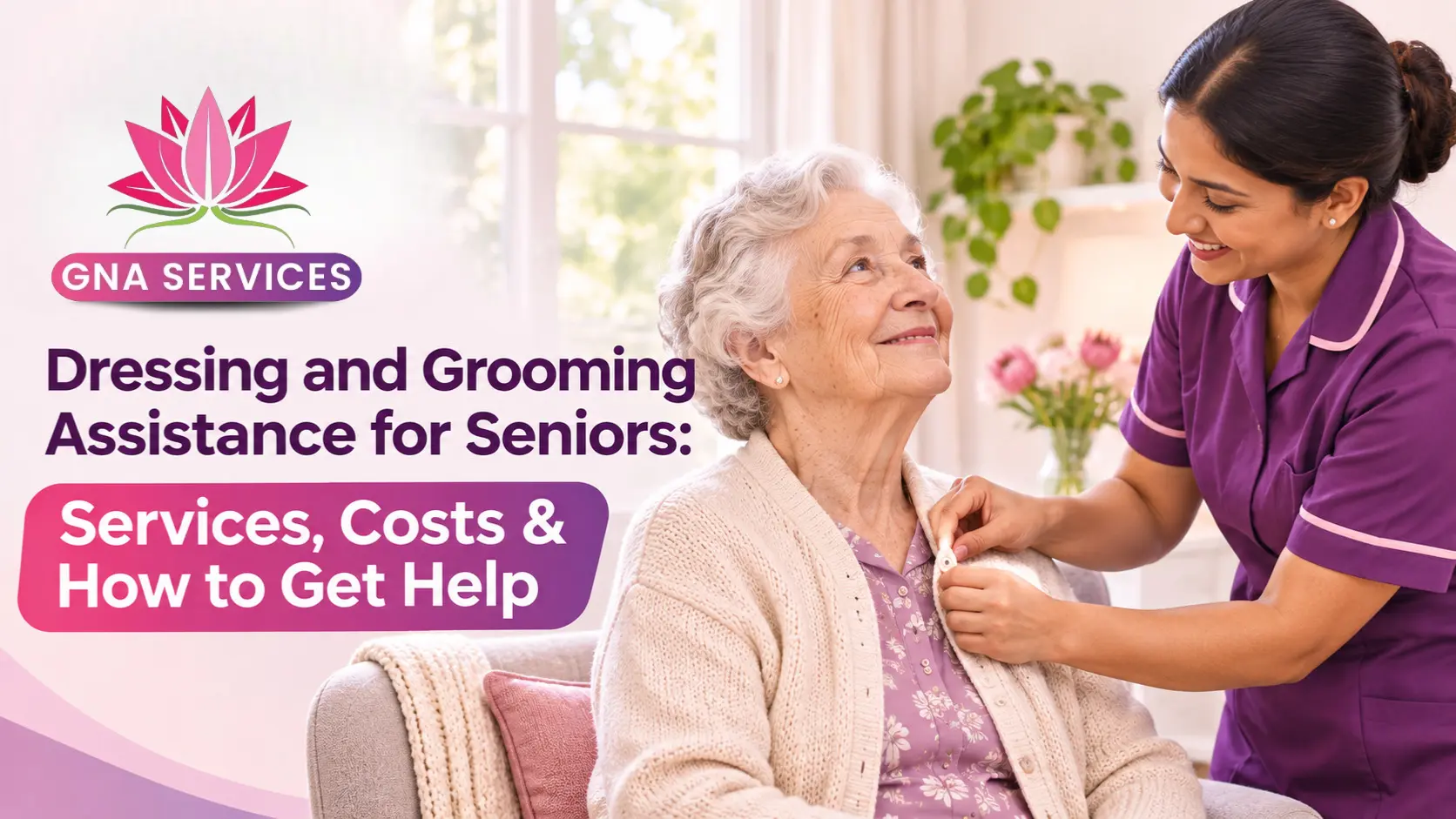
A personal care worker may help someone choose suitable clothes, manage buttons or zips, put on socks and shoes, or change into nightwear. They can also support a comfortable routine when arthritis, reduced hand strength or limited movement makes dressing difficult. Where safe, the older person should still be encouraged to complete the steps they can manage.
Hair Care, Shaving and Everyday Grooming
Grooming assistance may involve brushing and styling hair, washing and drying hair, helping with routine shaving or supporting basic personal hygiene. These familiar tasks can make a meaningful difference to comfort and confidence. However, dressing and grooming assistance for seniors through government-funded personal care should not be confused with salon services: general hairdressing and waxing expenses are excluded by My Aged Care.
Personal Hygiene and Safe Daily Routines
Some people also require help with showering, skin care, preparing to get dressed or moving safely between the bedroom and bathroom. These activities may be included in a wider personal care arrangement. Tasks requiring clinical assessment or treatment must be handled by appropriately qualified health professionals rather than assumed to be part of ordinary grooming support.
Who May Need Dressing and Grooming Assistance at Home?
Needing a little help does not mean losing independence. Dressing and grooming assistance for seniors may be useful for someone who struggles with fastenings, tires easily while standing, feels unsteady in the bathroom or becomes overwhelmed by a multi-step morning routine.
Families may also notice that an ageing parent wears the same clothes repeatedly, avoids grooming, has trouble reaching their feet or finds getting ready increasingly stressful. These changes are reasons for a supportive conversation, not a reason to take over. Sudden or marked changes in self-care, confusion or mobility should also be discussed with a GP or other suitable health professional.
How Can Personal Care Support Independence and Dignity?
The purpose of dressing and grooming assistance for seniors is to make daily living easier while preserving control. One person may need only a reminder and clothes laid out; another may need hands-on help with sleeves, shoes or hair care. A respectful worker asks permission, explains what they are doing and provides privacy during personal tasks.
For families, reliable support may also reduce the pressure of managing every morning and evening routine. Just as importantly, familiar schedules and individual preferences can help the older person feel more comfortable about accepting assistance.
How Much Does Dressing and Grooming Assistance for Seniors Cost in Australia?
The cost of dressing and grooming assistance for seniors depends on whether care is delivered through Support at Home, the Commonwealth Home Support Program (CHSP) or a private arrangement. There is no single nationwide hourly price that applies to every provider or funding pathway.
For a useful benchmark, an Australian Government report published in October 2026 found a national median price of $113 per hour for Support at Home assistance with self-care and daily living, based on weekday services delivered from January to March 2026. This is a charge against program funding, not a private-care quote or the amount an eligible participant must personally pay.
Prices vary by provider, location and visit length. When comparing dressing and grooming assistance for seniors, consider the agreed price and what each visit includes, not the national median alone.
Support at Home: Approved Personal Care From October 2026
From 1 October 2026, eligible Support at Home participants do not pay a participant contribution for approved personal care, including help with dressing, when personal care is included in their support plan, and enough funding is available in their Support at Home budget. The service still uses their allocated program funds; it does not mean unlimited services are available at no cost.
This change is significant for families considering dressing and grooming assistance for seniors. Other services, including cleaning and gardening, may still attract contributions. If you already receive Support at Home, ask your provider to confirm how personal care is shown in your care plan, budget and statements.
CHSP: Subsidised Entry-Level Personal Care
The CHSP supports eligible older people who need a lower level of assistance to continue living at home. Personal care may be available after an aged care assessment, subject to local service availability. CHSP clients are generally asked to contribute towards service costs if they can afford to, with the amount determined under the provider's contribution policy.
The October 2026 Support at Home personal care contribution change does not automatically make CHSP services free. Before arranging dressing and grooming assistance for seniors through CHSP, confirm both your assessed eligibility and the provider's contribution policy.
Private or Self-Funded Personal Care
Families who choose privately arranged dressing and grooming assistance for seniors should request an individual quote. Ask about the hourly or visit rate, any minimum booking time, weekend or public holiday pricing, cancellation terms and which tasks are included.
Confirm costs before services begin, rather than relying on an advertised estimate that may not match your situation.
How Do You Arrange Dressing and Grooming Assistance for Seniors?
If you are seeking government-funded support, start with My Aged Care. Government-subsidised aged care is generally available from age 65, or from age 50 for Aboriginal and Torres Strait Islander people and people experiencing or at risk of homelessness, subject to eligibility requirements.
The usual pathway is straightforward:
- Describe the daily difficulties. Note whether dressing, showering, hair care or moving around the home requires reminders, supervision or physical help.
- Request an assessment. Apply through My Aged Care online or call 1800 200 422. An assessor will consider your needs and determine suitable services and eligibility.
- Review the approved support. Check whether personal care is included in the assessment outcome and what funding or service arrangements apply.
- Compare providers. Ask whether they deliver the approved services in your area and can accommodate preferred routines, communication needs and visit times.
- Agree on a care plan. Discuss what help will be provided, how often visits will occur, who will assist and how changes can be requested.
Alternatively, families can enquire about private in-home care directly with a provider. For either pathway, dressing and grooming assistance for seniors should be tailored to the older person's preferences and actual support needs.
What Should You Look for in an Aged Care Personal Care Worker?
Choosing someone to assist with private daily activities is an important decision. When comparing providers for dressing and grooming assistance for seniors, ask how workers are screened and trained, how privacy and consent are respected, and what happens if a regular worker is unavailable.
It also helps to discuss cultural and language preferences, requests for a particular worker's gender, experience with mobility difficulties, and how concerns will be handled.
Some preferences can be accommodated depending on workforce availability. Clear communication matters more than promises that every request can always be met.
What Happens During a Typical Morning Care Visit?
A morning visit might begin with the worker checking how the older person is feeling and asking what they would like to wear. Depending on the agreed plan, the worker could assist with washing, hair care, fastening clothes or putting on footwear.
They may offer practical support with moving safely, while allowing time for the person to do whatever they can independently.
Dressing and grooming assistance for seniors should never feel like a rushed checklist. A good routine adapts to how someone feels on the day, offers choice and treats personal preferences with respect.
If dressing, grooming or everyday self-care is becoming difficult for you or someone you love, Guardian Nursing Agency can discuss suitable in-home support options. Our dressing and grooming assistance for seniors focuses on respectful help with clothing, hair care, hygiene and other agreed daily routines, with attention to comfort, privacy and independence. Guardian Nursing Agency provide personal care for seniors and can help you explore relevant care arrangements where our services are available. Contact us to ask about service availability and possible costs.