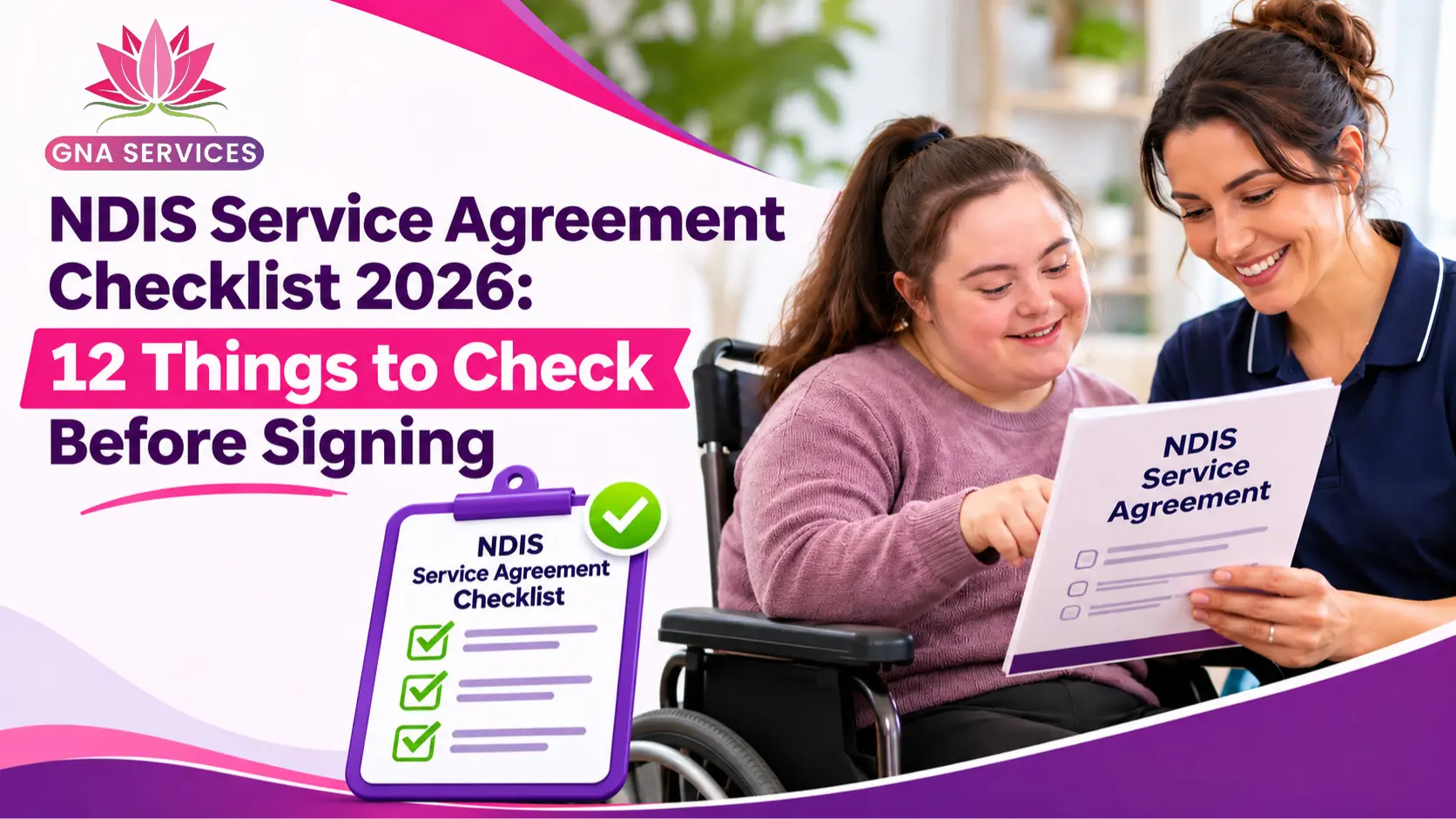
Choosing disability supports is a personal decision, and the paperwork should make that choice clearer, not harder. Whether you are arranging daily living assistance for the first time or changing an NDIS support provider, an NDIS service agreement checklist can help you understand what you are agreeing to, what you may be charged and how your preferences will be respected. Here are 12 practical checks for participants, families and carers across Australia.
What Is an NDIS Service Agreement, and Is It Compulsory in 2026?
A service agreement sets out the supports that a participant and provider have agreed on, how those supports will be delivered, the associated costs and each party's responsibilities. It is separate from your NDIS plan and, where applicable, your tenancy agreement. A clear NDIS service agreement checklist makes it easier to compare proposed terms before care begins.
A written service agreement is mandatory for Specialist Disability Accommodation (SDA). The National Disability Insurance Agency (NDIA) strongly encourages agreements for Supported Independent Living (SIL) and recommends them for other supports, although they are not generally compulsory. An agreement may be written or, for many supports, made through discussions or other communications. Even when signing is not mandatory, written terms can help prevent misunderstandings.
The NDIA published updated service agreement guidance, templates and an Easy Read resource in October 2026. Its template is optional and must be tailored to the individual. The following NDIS service agreement checklist is a practical guide rather than legal advice or a substitute for reading your own contract.
NDIS Service Agreement Checklist: 12 Essential Checks Before You Sign
Use this NDIS service agreement checklist when reviewing a new agreement, renewing existing supports or discussing changes with a provider. You can ask questions, request accessible wording and involve someone you trust.
1. Check the Participant's and Provider's Details
Confirm your name, the provider's correct business name, contact details and any nominated representative or guardian. Identify the person to contact about rostering, billing and urgent changes.
If someone assists with decisions or communication, record their role accurately rather than assuming they can sign on your behalf. Start by confirming who is responsible for each part of the arrangement.
2. Confirm Exactly Which Supports Will Be Delivered
Look for plain-language descriptions of the agreed services: for example, showering and dressing assistance, meal preparation, skill development or community participation. Check support categories and relevant item descriptions or numbers where appropriate.
Vague phrases such as “general care as required” can make expectations difficult to manage. Your NDIS service agreement checklist should connect each promised service with what you actually need.
3. Review the Days, Hours, Locations and Staffing Arrangements
Ask when support will take place, its frequency, the expected duration and where it will be delivered. For regular in-home assistance, clarify what happens if a worker is unavailable or a scheduled visit changes.
If consistent workers, communication preferences or particular routines matter, discuss how these will be considered. These practical details should reflect your everyday life, not just a provider's standard roster.
4. Make Sure the Supports Match Your Goals and Choices
Your NDIS plan outlines your goals and funded supports; the service agreement describes the specific arrangements made with a provider.
Check that the proposed assistance is relevant to your disability-related needs and funding, and ask about any uncertainty before committing. Importantly, you should be involved in deciding how your supports are delivered.
This NDIS service agreement checklist is also a reminder to speak up if an arrangement does not fit your preferences.
5. Clarify the Funding and Payment Process
Check whether your supports are NDIA-managed, plan-managed or self-managed, and how invoices will be issued and paid. Ask who checks available funding and what happens if a claim is rejected or your plan changes.
Avoid assuming that every proposed service is automatically covered. In your NDIS service agreement checklist, record any amounts you may need to pay yourself and ask for an explanation before agreeing.
6. Check Hourly Rates, Totals and Any Applicable Price Limits
The agreement should show the quantity or hours of support, unit price, estimated total cost and GST component where applicable.
For NDIA-managed and plan-managed supports, the applicable 2026–27 NDIS pricing schedules set maximum claimable prices; different arrangements may apply to self-managed participants.
A good NDIS service agreement checklist prompts you to compare agreed charges with current official pricing information and question any unexplained increase.
7. Ask About Travel, Transport and Additional Charges
Travel time, provider travel costs and activity-related transport expenses can affect the cost of support. Ask what is charged, when it applies, how it is calculated and whether it is eligible to be claimed from your plan.
Also clarify any ordinary personal expenses, such as entry tickets or meals, which may not be NDIS-funded.
Include these details in your NDIS service agreement checklist so there are fewer surprises when invoices arrive.
8. Understand Appointment Cancellation and No-Show Conditions
Find out how to cancel a scheduled support, whom to notify and what notice is required. Check whether a short-notice cancellation fee can apply and under what circumstances; not every service or cancellation attracts the same rules.
Ask what happens if the provider cancels, arrives late or cannot supply a replacement worker.
An NDIS service agreement checklist should distinguish charges for missed appointments from the notice period for ending the overall agreement.
9. Review Start Dates, End Dates and Scheduled Reviews
Make sure the document states when services begin, how long the arrangement lasts and when it will be reviewed.
Your circumstances may change because of a new NDIS plan, different goals or changing care needs.
An NDIS service agreement checklist should make it easy to identify who to contact to discuss a review and whether new arrangements need to be documented before they start.
10. Know How to Change or End the Agreement
Look for a clear process for requesting adjustments, changing support hours or ending services. Check the notice period, potential charges and how final invoices will be handled.
You can ask for changes before agreeing to terms; significant changes later may call for a new agreement.
Use the NDIS service agreement checklist to ask what happens to essential supports during a transition, particularly if you are moving to another provider.
11. Confirm Responsibilities, Privacy, Safety and Communication
An agreement should explain how you and the provider will work together, including respectful communication, safe delivery of support and management of personal information.
Ask how concerns about incidents, worker conduct or changes to your needs will be handled. You can request information in an accessible format or ask for an interpreter.
This NDIS service agreement checklist should protect your ability to understand, participate in and make decisions about your care.
12. Check Complaints, Participant Rights and Copies of the Agreement
Know how to raise a concern with the provider and where to seek outside help if it cannot be resolved. You can complain to the NDIS Quality and Safeguards Commission about the safety or quality of NDIS supports.
Providers cannot use contract wording to remove obligations under the NDIS Code of Conduct or Australian Consumer Law.
Before finalising your NDIS service agreement checklist, request a copy of the agreed terms for your records.
Quick NDIS Service Agreement Checklist to Save Before Signing
Use this shortened NDIS service agreement checklist during a conversation with a provider:
- Participant, provider and representative details are correct.
- Each support is clearly described.
- Hours, location, frequency and staffing expectations are explained.
- Supports reflect my needs, preferences and NDIS funding.
- The payment process and any personal contributions are clear.
- Rates, total costs and applicable price limits have been checked.
- Travel and other extra charges are explained.
- Appointment cancellation and provider cancellation rules are clear.
- Start, end, and review dates are stated.
- Changes, termination notice and transition arrangements are explained.
- Responsibilities, privacy, accessibility and safety are covered.
- Complaints, participant rights and a copy of the agreement are addressed.
If any box remains unchecked, pause the signing process and ask for clarification. A useful NDIS service agreement checklist supports an informed choice; it should never make you feel rushed.
Red Flags in NDIS Provider Agreements
Be cautious about unclear prices, unexplained additional fees, pressure to sign immediately, broad permission to change services without discussion or unreasonable obstacles to changing providers. Likewise, question terms that suggest you cannot complain or that the provider is not responsible for service quality.
For example, if an agreement lists “transport charges as required” without a rate or explanation, ask for a written breakdown.
If an agreement promises daily personal care but does not specify the planned frequency, request a clearer schedule. The NDIS service agreement checklist helps turn concerns like these into practical questions rather than assumptions.
Choosing an NDIS Support Provider With Confidence
The right provider should explain services in language you understand, welcome reasonable questions and respect your individual goals.
When comparing options, ask about worker availability, relevant experience, communication, pricing and how changes to support are managed.
A clear NDIS service agreement checklist is one part of making an informed decision; the quality and suitability of the support matter just as much.
If you are reviewing an NDIS service agreement checklist or exploring support options, Guardian Nursing Agency, also known as GNA Services, can help you discuss your goals and the services that may suit your needs. As a registered NDIS support provider, Guardian Nursing Agency offer personal care and daily living assistance, community participation, skill development and other disability supports, subject to location and service availability. There is no need to make a decision before you understand your options. Explore our NDIS services, contact us to ask a question or enquire about support in your area.