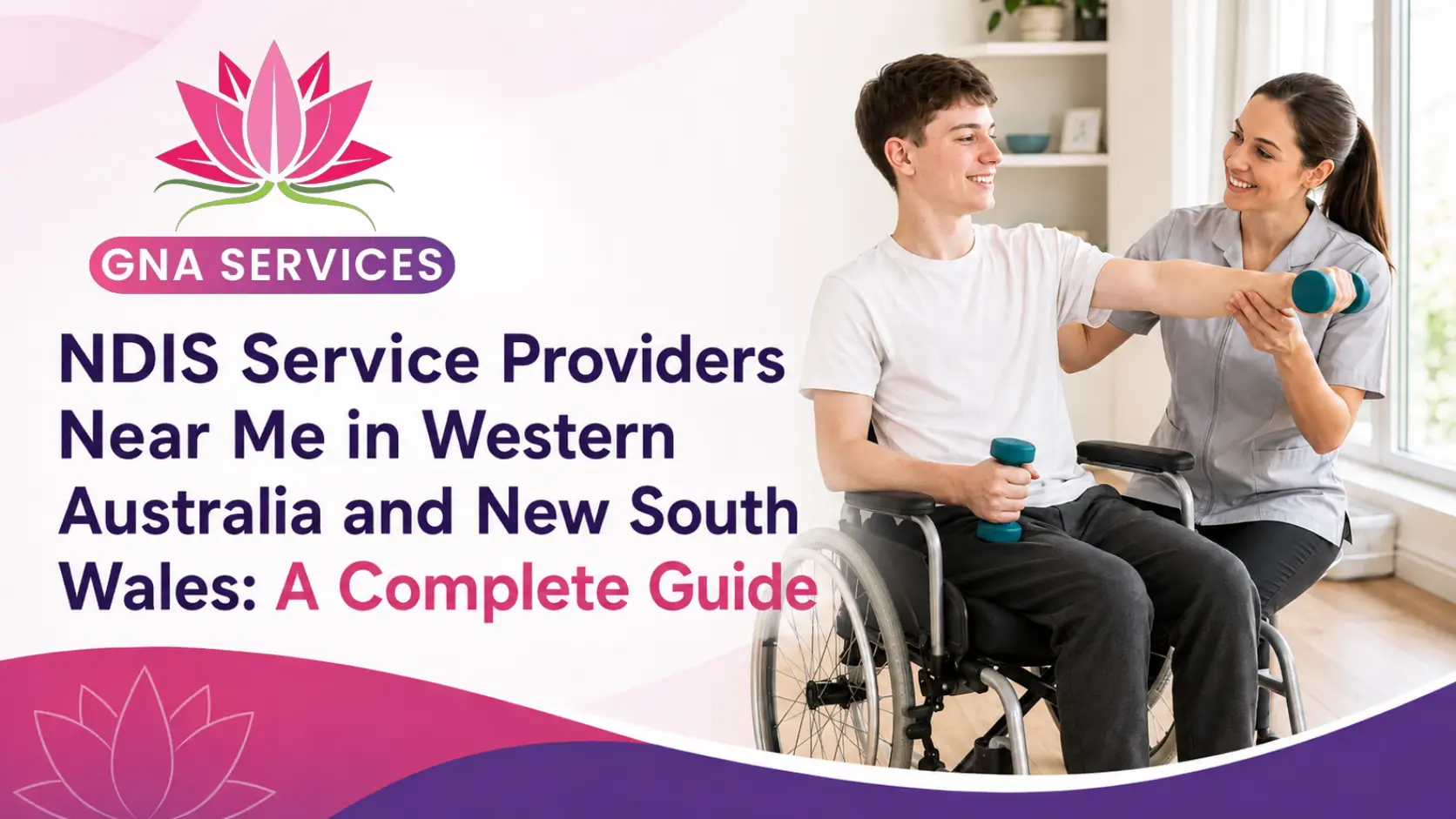
Searching for NDIS service providers near me can feel overwhelming when you want reliable, respectful and personalised disability support. Whether you live in Western Australia or New South Wales, choosing the right NDIS support provider means looking beyond location alone. The right provider should understand your goals, communicate clearly, offer suitable services and respect your choice, control and independence. Taking time to compare providers can help you find support that fits your daily routine, personal preferences and long-term NDIS goals.
What Does “NDIS Service Providers Near Me” Really Mean?
When people search for NDIS service providers near me, they are usually looking for more than the closest disability support organisation. They want a provider that is accessible, responsive and able to deliver the right supports within their local community.
These supports may include personal care, assistance with everyday activities, community participation, skill development, Supported Independent Living, behaviour support or assistance for more complex disability needs.
However, proximity should not be the only deciding factor. Participants and families should also consider service quality, support worker suitability, availability, experience, communication and whether the provider can deliver supports that align with the participant’s NDIS plan.
Choosing locally can make communication, scheduling and service coordination easier. Nevertheless, the best provider is one that combines local availability with quality, reliability and personalised support.
How to Find a Trusted NDIS Support Provider in WA and NSW?
Finding NDIS service providers near me starts with understanding the supports included in your NDIS plan and the outcomes you want to achieve.
The NDIS Provider Finder can help participants search for registered providers using a suburb or postcode. You can also research provider websites, read available reviews, ask questions and seek recommendations from people you trust.
Before contacting providers, write down your main support priorities. A search for NDIS service providers near me becomes much more useful when you can clearly explain the type of assistance you require, when you need it and what you would like your support to help you achieve.
For example, you may need assistance with personal care, household routines, accessing the community, developing independent living skills, accommodation support or behaviour support.
Having clear priorities makes it easier to compare providers based on what matters most to you.
Check Whether the Provider Offers the Right NDIS Supports
Not every NDIS support provider offers the same range of services. Some may specialise in daily personal support, while others focus on Supported Independent Living, community participation, skill development or more complex disability support.
Before choosing a provider, confirm that it offers the specific services you need.
When comparing NDIS service providers near me, it is also worth considering whether the provider can adjust your supports if your circumstances, goals or level of assistance change over time.
Flexible support can be particularly important for participants whose needs evolve or whose NDIS plans change following a reassessment or plan review.
Registered vs Unregistered NDIS Providers: What Should You Know?
A common question when researching NDIS service providers near me is whether a provider needs to be registered.
A registered NDIS provider has met applicable registration requirements administered by the NDIS Quality and Safeguards Commission. Registered providers must meet relevant standards and obligations based on the types of supports they deliver.
Participants with NDIA-managed funding generally need to use registered providers for supports paid from that funding arrangement.
Plan-managed and self-managed participants may have greater flexibility in choosing registered or unregistered providers, although some types of regulated supports must be delivered by registered providers.
Therefore, when comparing NDIS service providers near me, registration status should be considered alongside several other factors.
A suitable NDIS support provider should also demonstrate:
- Clear and respectful communication
- Appropriate worker screening and training
- Transparent service information
- Clear pricing and cancellation policies
- Participant choice and control
- Reliable scheduling
- Effective complaints and feedback processes
- A willingness to personalise supports
Registration is important, but compatibility, reliability and the quality of support also matter when choosing a provider.
What Services Can Local NDIS Providers Help With?
People searching for NDIS service providers near me are often looking for practical assistance that can improve independence, safety and participation in everyday life.
The services available will depend on the participant’s individual NDIS plan, goals, approved funding and support needs.
Personal Care and Daily Living Assistance
Personal care support may include assistance with showering, dressing, grooming, hygiene, mobility, meal preparation and other everyday activities.
Quality support should be delivered with dignity and respect while encouraging participants to maintain as much independence as possible.
Rather than simply completing tasks for someone, a good support worker should understand the participant’s preferences and assist them in a way that promotes confidence, safety and control over their routine.
Community Participation and Social Support
Community participation can help NDIS participants become more involved in social, recreational and community activities.
When comparing NDIS service providers near me, consider how a provider supports participants to pursue their own interests instead of relying on a standardised activity program.
Support may involve attending community events, recreational activities, appointments, social groups or other activities that help participants build confidence and maintain meaningful community connections.
Skill Development and Greater Independence
A capable NDIS support provider may also help participants build practical skills that support greater independence.
Depending on individual goals, skill development may include communication, money management, meal preparation, household tasks, public transport skills, technology use, education or employment-related activities.
The aim is not simply to provide immediate assistance but, where appropriate, to help participants develop skills they can use more independently over time.
Supported Independent Living and Accommodation
Supported Independent Living, commonly known as SIL, may be suitable for participants who require regular support while living independently or in a shared home environment.
Choosing the right provider is especially important because support workers may be involved in many aspects of everyday home life.
Participants and families should ask about staffing arrangements, daily routines, participant choice, worker compatibility and how the provider personalises support.
It is also important to understand what SIL includes and how it relates to the participant’s individual NDIS funding.
Behaviour and Complex Disability Support
Some participants require more specialised or intensive assistance.
This may include behaviour support, high-intensity daily support or assistance for people living with complex disabilities, spinal cord injuries, traumatic brain injuries or other significant support needs.
When complex needs are involved, ask potential providers about their experience, staff capabilities, training, risk management and how they coordinate support around the participant’s individual circumstances.
How Do I Compare NDIS Service Providers Near Me?
The best way to compare NDIS service providers near me is to use a consistent checklist instead of choosing a provider based only on distance, advertising or a single review.
Start by considering whether the provider understands your needs and whether its services align with your NDIS goals.
Useful questions include:
- Is the provider registered where registration is required?
- Does the provider offer the supports I need?
- Does it currently have capacity in my area?
- Are support workers appropriately trained and screened?
- How are participants matched with support workers?
- Can I request another worker if the match is not suitable?
- Are service rates clearly explained?
- What are the cancellation terms?
- What happens if my regular worker is unavailable?
- How quickly does the provider respond to enquiries?
- How are concerns or complaints managed?
- Can my supports change as my goals or circumstances change?
Using these questions searches NDIS service providers near me more practical and helps you assess providers based on reliability, suitability and service quality.
How Important Is Support Worker Compatibility?
Support worker compatibility can make a significant difference to the participant’s overall experience.
Support often involves spending considerable time together, particularly when assistance is provided regularly at home or in the community.
Therefore, participants should feel comfortable communicating their needs, preferences and boundaries.
When assessing an NDIS support provider, ask how support workers are matched with participants.
Factors such as personality, communication style, interests, cultural preferences, language, experience and availability can all influence whether a worker is a suitable match.
A provider should also explain what happens if the participant feels that a worker is not the right fit.
What Should Be Included in an NDIS Service Agreement?
Before beginning regular support, it is useful to understand the service agreement offered by the provider.
A service agreement can outline what supports will be delivered, when they will be provided, how much they cost, the responsibilities of each party and how services can be changed or ended.
When choosing an NDIS support provider, read the agreement carefully before accepting it.
Pay particular attention to:
- Services being provided
- Service schedules
- Pricing
- Travel charges where applicable
- Cancellation conditions
- Notice periods
- Participant responsibilities
- Provider responsibilities
- Feedback and complaints processes
- How the agreement can be changed
- How services can be ended
Most importantly, the agreement should clearly reflect what you discussed with the provider.
If anything is unclear, ask questions before services begin.
How Much Do NDIS Providers Charge?
Cost is another important consideration when comparing NDIS service providers near me.
Provider charges may vary depending on the type of support, time of day, day of the week, location, travel requirements and applicable NDIS pricing arrangements.
Before agreeing to services, ask for clear information about rates and any additional charges that may apply.
You should understand what you may be charged for regular support, cancellations, provider travel or other agreed costs.
Transparent pricing helps participants manage their NDIS budgets and reduces the risk of unexpected charges.
Price is important, but it should not be considered in isolation. The cheapest service may not necessarily provide the reliability, worker compatibility or quality of support that best suits your circumstances.
Can I Change My NDIS Provider?
Yes. Participants can consider changing providers if their current support is no longer meeting their needs.
People may change providers because of poor communication, unreliable scheduling, unsuitable support workers, limited service availability or changing personal goals.
This is another common reason people search for NDIS service providers near me.
Before changing providers, review your existing service agreement to check any notice period or cancellation requirements.
It can also be helpful to identify a suitable new provider before ending your current support. This may reduce the risk of experiencing an unnecessary gap between services.
Speak with the new provider about capacity, onboarding, worker availability and how soon services may be able to begin.
Finding NDIS Service Providers Near Me in Western Australia
Western Australia covers a large geographic area, so local availability can be particularly important when choosing disability support.
Participants in Perth and surrounding metropolitan areas may have access to a wide range of providers. However, availability can vary between suburbs and according to the type of support required.
Participants living in regional areas may need to consider travel arrangements, worker availability and the provider’s capacity to offer consistent services over longer distances.
If you are searching for NDIS service providers near me in Western Australia, ask whether the provider currently services your suburb or regional community.
You may also want to ask:
- Are local support workers currently available?
- How are travel costs handled?
- Can the provider support my preferred schedule?
- What happens if a worker is unavailable?
- Does the provider offer the specific support I require?
- Can services continue if my support needs increase?
A provider may advertise services across Western Australia but still have different levels of capacity in individual locations. Therefore, confirming current availability is important before making a decision.
Finding NDIS Service Providers Near Me in New South Wales
New South Wales also has a large and diverse NDIS participant population, with providers operating across Sydney, Western Sydney, Greater Sydney and regional communities.
Participants in larger metropolitan areas may have many providers to choose from. While this creates more options, it can also make comparison more difficult.
When searching for NDIS service providers near me in NSW, consider whether the provider has genuine local capacity rather than simply listing your area among its service locations.
Ask about worker availability, service schedules and whether the provider can deliver the specific supports included in your NDIS plan.
Participants should also consider the provider’s communication processes and how quickly issues can be resolved if circumstances change.
Local knowledge may be particularly useful when support involves regular community participation, transport, appointments or activities within the participant’s local area.
Questions to Ask Before Choosing an NDIS Provider
Before choosing an NDIS support provider, prepare a list of questions that can help you understand how the organisation operates.
A reliable provider should be comfortable answering questions about its services, workers, availability, pricing and approach to participant support.
Useful Questions for Participants and Families
Consider asking:
- Are you a registered NDIS provider?
- Do you offer the support included in my plan?
- Do you currently have capacity in my suburb?
- How do you match participants and support workers?
- Can I meet or speak with a potential worker first?
- Can I request a different support worker?
- What are your current rates?
- Are there any additional charges?
- What is your cancellation policy?
- What happens if my regular support worker is unavailable?
- How do you manage feedback and complaints?
- Can my family, nominee or support coordinator be involved?
- How will my support be reviewed?
- Can my services change as my goals develop?
Asking detailed questions can transform a broad search for NDIS service providers near me into a more informed comparison based on your actual needs.
What Makes a Good Local NDIS Provider?
A good provider should understand that every participant is different.
People have different routines, goals, personalities, communication preferences, cultural backgrounds and support requirements. For that reason, disability support should not follow a one-size-fits-all model.
A quality NDIS support provider should listen carefully and involve participants in decisions about how their support is delivered.
Communication is also essential.
Participants should know who to contact when they need assistance, how schedules are managed and what happens when changes are required.
Consistency is another important factor. Regular changes in support workers or unreliable scheduling may make it difficult for participants to build trust and maintain their routines.
Therefore, when comparing providers, consider the complete experience rather than focusing only on the services listed on a website.
How to Choose the Right Local NDIS Provider?
Ultimately, the right provider is one that can deliver appropriate support while respecting your preferences, rights and goals.
Location certainly matters, particularly when you need regular in-home or community-based support. However, proximity should be considered alongside quality, worker compatibility, responsiveness and reliability.
Instead of asking only, “Which NDIS service providers near me are closest?”, consider asking:
“Which provider has the right services, local availability and approach for my circumstances?”
Take time to compare your options, speak with several providers where possible and understand how each organisation would approach your day-to-day support.
A thoughtful decision can help create a more consistent, respectful and positive support experience.
If you are currently comparing NDIS service providers near me in Western Australia or New South Wales, Guardian Nursing Agency (GNA Services) can help you explore support options based on your individual needs and NDIS goals. As an experienced NDIS support provider, Guardian Nursing Agency offers personalised support across areas such as personal care and daily living, community participation, skill development, accommodation and Supported Independent Living, behaviour support and complex disability care. Contact us today to discuss your support requirements, local service availability and how GNA Services can help you work towards greater independence, confidence and participation in everyday life.