Choosing the right care model can make daily life safer, calmer and more independent for older Australians and their families. If you are exploring Support at Home, understanding the difference between self-managed and fully managed care is an important first step. Working with an experienced aged care service provider can also help you make informed decisions, organise services and feel more confident about the support you or your loved one receives.
Support at Home is designed to help eligible older Australians remain living safely and comfortably in their own homes. Instead of taking a one-size-fits-all approach, it focuses on practical assistance, personal care, clinical care and everyday support that matches each person’s needs. However, before choosing services, it is important to understand how your care can be managed and what level of involvement suits your family.
What Is Support at Home?
Support at Home is an in-home aged care program that helps older Australians access care and assistance while continuing to live in familiar surroundings. It may include help with showering, dressing, grooming, cleaning, meals, transport, nursing, social support, mobility and respite, depending on assessment outcomes and individual needs.
For many people, Support at Home is about more than receiving services. It is about staying independent, maintaining dignity, feeling safe and reducing pressure on family carers. Whether you live in Perth, regional WA, Sydney, NSW or another part of Australia, the goal is the same: to receive the right care at the right time in the place you call home.
Because every person’s health, lifestyle and family situation is different, the best care model should feel practical, respectful and manageable. This is where understanding self-managed and fully managed options becomes important.
What Does Self-Managed Support at Home Mean?
Self-managed Support at Home gives participants and families more involvement in how care is organised. This may include having a stronger say in service preferences, schedules, communication and daily care decisions. It can be a good option for people who want more control and feel confident taking an active role in planning support.
However, self-management does not mean a person is left to manage everything alone. Safe aged care still requires proper planning, regular review and clear communication. Participants may still need guidance to ensure services align with their assessed needs, personal goals and wellbeing.
Self-managed care may suit older people who have stable needs and a strong support network. For example, if a family member can help coordinate appointments, communicate with workers and monitor changes, this option may feel empowering. However, it does require time, organisation and confidence.
What Does Fully Managed Support at Home Mean?
Fully managed Support at Home is a more coordinated option where the provider takes a stronger role in organising and monitoring care. This may include service scheduling, care planning, worker coordination, family communication, progress reviews and adjustments when needs change.
For many families, fully managed care offers peace of mind. Instead of trying to manage every detail, the participant and family can rely on professional support to help keep services consistent and well organised. This can be especially helpful when care involves personal care, nursing, mobility support, medication prompts or multiple weekly visits.
Fully managed care may also suit busy families, those who live far away or those who feel unsure about navigating aged care systems. For example, adult children in Sydney may be supporting a parent in regional NSW, or a family in Perth may need coordinated care for an older loved one in WA. In these situations, provider-managed support can reduce stress and improve continuity of care.
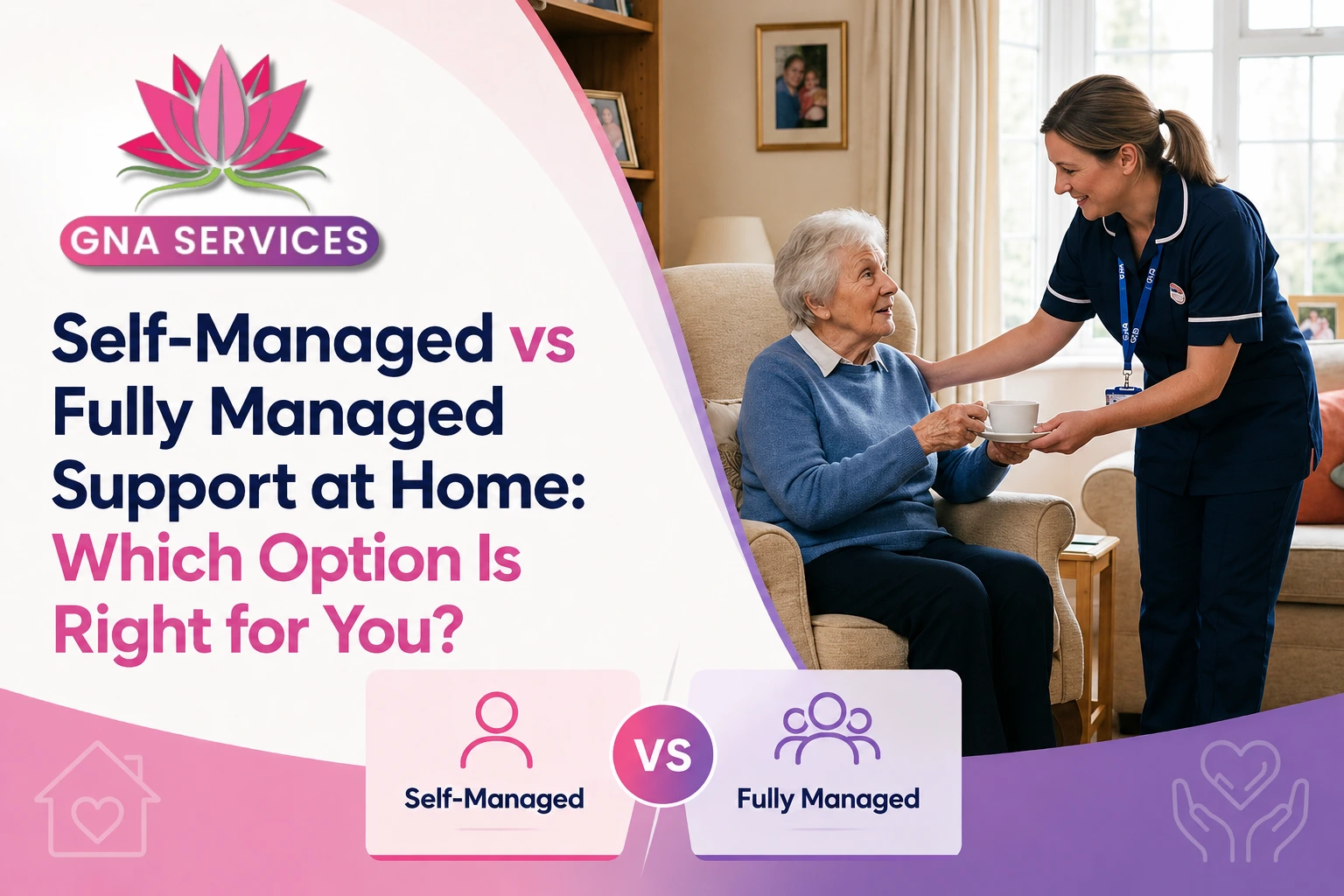
Self-Managed vs Fully Managed Care: Key Differences
The main difference is the level of responsibility you want to take on. Self-managed care offers more personal involvement, while fully managed care provides more professional coordination.
With self-managed Support at Home, you may have more influence over how services are arranged. This can feel flexible and empowering. However, it may also mean more time spent communicating, checking schedules, following up on changes and making decisions.
With fully managed Support at Home, the provider manages more of the practical details. This can make care easier to navigate, especially when needs are complex or changing. However, it is still important that the provider listens to your preferences and keeps you informed.
Both options can work well when they are matched to the person’s needs. The right choice depends on confidence, family availability, care complexity and how much support is needed to manage services effectively.
Benefits of Self-Managed Support at Home
Self-managed care can offer greater flexibility and choice. Many older Australians value having more control over their routines, support preferences and daily decisions. This can help care feel more personal and less clinical.
Another benefit is involvement. Families who want to stay closely connected to a loved one’s care may appreciate being part of the planning process. This can be helpful when routines are simple, needs are stable, and communication is easy.
However, self-managed Support at Home works best when there is enough time and support available. If family members are busy or the person’s care needs become more complex, managing details may become overwhelming. Therefore, it is important to be realistic about what you can manage comfortably.
Benefits of Fully Managed Support at Home
Fully managed care can provide structure, consistency and reassurance. A provider can help coordinate services, monitor changing needs and ensure the care plan remains suitable over time.
This option can be especially valuable for people with higher support needs. For example, someone who requires assistance with showering, dressing, wound care, medication support, mobility or regular nursing may benefit from professional coordination.
Fully managed Support at Home may also reduce stress for carers. Instead of organising every service alone, families can work with a provider who understands aged care processes, service delivery and person-centred support. This can help everyone feel more supported and confident.
Common Services Available Through Support at Home
Depending on individual assessment and approval, services may include personal care, domestic assistance, meal preparation, laundry, shopping, gardening, transport, social support and respite care.
Clinical services may also be available, including nursing care, wound care, medication assistance, continence support and health monitoring. These services can help older Australians stay safer at home and reduce the need for avoidable hospital visits.
Because every person’s situation is different, it is important to discuss approved supports, preferences and goals with a trusted provider. The right plan should support independence while also protecting health, safety and wellbeing.
How to Choose the Right Option for Your Needs?
Start by considering the level of care required. If support is mainly light domestic assistance or simple routine help, self-managed care may be suitable. However, if care involves personal care, nursing, changing health needs or multiple services, fully managed care may offer better support.
Next, think about family involvement. Do you have someone who can help communicate, organise services and monitor changes? If yes, self-management may be easier. If not, a fully managed option may reduce pressure and provide more reassurance.
Also consider your confidence with aged care systems. Some people enjoy being hands-on, while others prefer clear guidance from a provider. A reliable aged care service provider should explain your options clearly and help you choose a model that suits your needs, not pressure you into one pathway.
Why Local Provider Support Still Matters Across Australia?
Although Support at Home is a national program, local knowledge can make a meaningful difference. A provider that understands your community can offer more responsive communication, better service coordination and support that reflects local needs.
For example, care delivery in metropolitan Sydney may look different from care in regional NSW. Likewise, families in Perth or wider WA may need flexible scheduling, local worker availability and practical support that fits their area. Local experience can help make aged care feel more personal and easier to access.
At the same time, the blog topic should not be limited to one location. Older Australians across the country are asking the same questions: Which care model gives me the right balance of control, safety and support? That is why comparing self-managed and fully managed options is useful for families nationwide.
Which Support at Home Option Is Right for You?
There is no single answer that suits every person. Self-managed care may be right if you want more control, have stable needs and have family support available. Fully managed care may be right if you prefer professional coordination, have complex needs or want a simpler care experience.
The best option is the one that helps you or your loved one feel safe, respected and supported at home. Take time to consider your health needs, family situation, confidence and lifestyle before deciding.
Ultimately, Support at Home should make everyday life easier, not more stressful. With the right guidance and care model, older Australians can continue living at home with dignity, independence and confidence.
If you are comparing self-managed and fully managed Support at Home options, Guardian Nursing Agency can help you understand your choices and plan the right next step. As a trusted aged care service provider, Guardian Nursing Agency supports older Australians with compassionate, person-centred care designed to promote dignity, independence and wellbeing at home. Guardian Nursing Agency, also known as GNA Services, currently supports communities across Perth, WA, Sydney and NSW, while providing guidance that is relevant for families exploring aged care options across Australia. Contact us today to discuss your aged care needs, explore suitable services and find the right Support at Home option for you or your loved one.