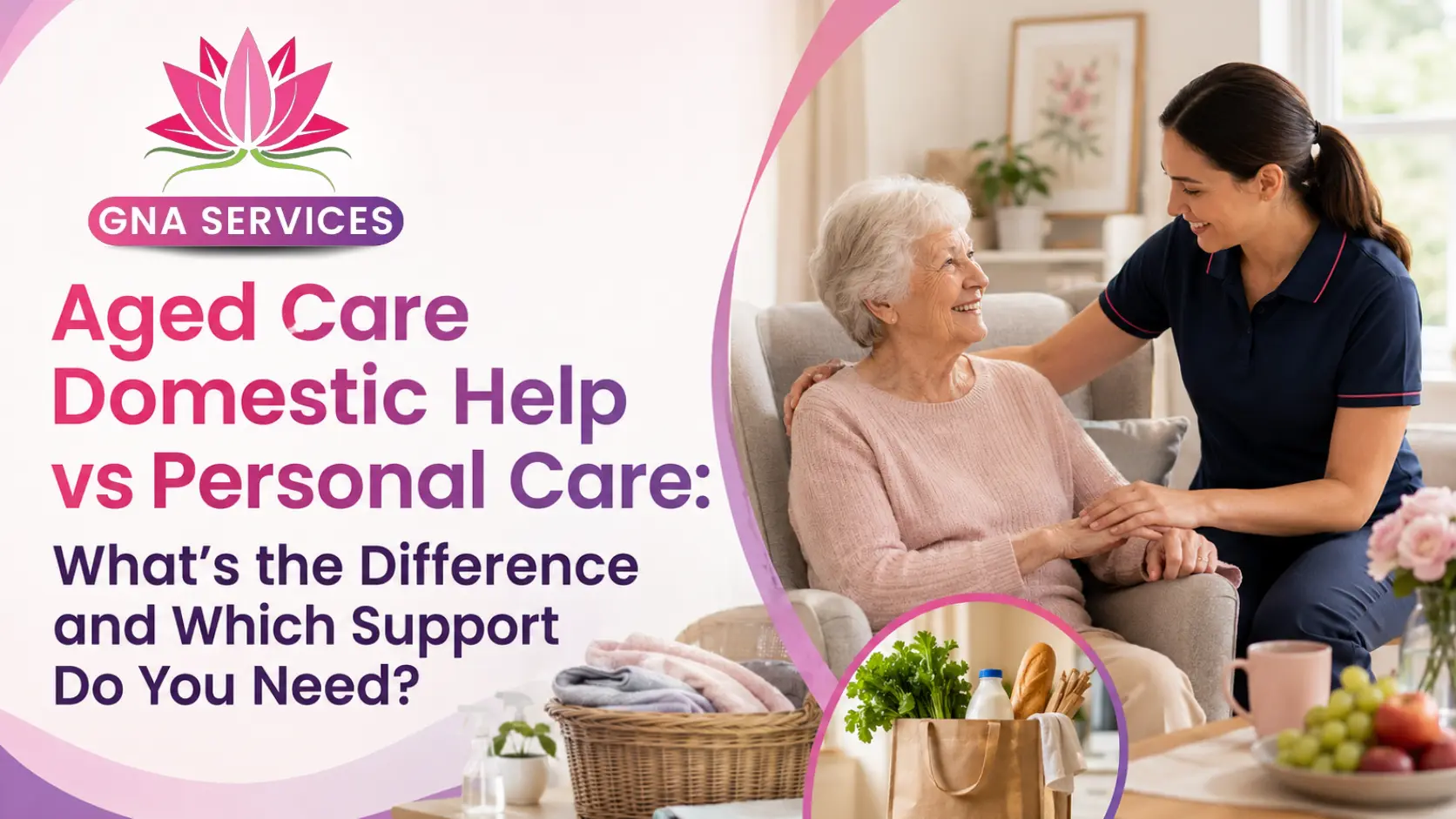
As people get older, everyday tasks can become more difficult, but the type of support needed can vary greatly from one person to another. Aged care domestic help focuses mainly on practical household tasks, while personal care supports an older person with their own daily hygiene, mobility and self-care. Understanding the difference between aged care domestic assistance and personal care can help older Australians and their families choose services that support safety, dignity and independence at home.
Quick Answer: Aged Care Domestic Help vs Personal Care
In simple terms, aged care domestic help is assistance with tasks around the home, such as general cleaning, laundry and shopping. Personal care, on the other hand, involves direct assistance with activities such as showering, dressing, toileting, grooming and other personal daily routines.
Some older people need only household support. Others need personal care, and many benefit from a combination of both. The right option depends on the person’s assessed needs, health, mobility, confidence and ability to manage daily activities safely.
What Is Aged Care Domestic Help?
Aged care domestic help is practical support designed to make it easier and safer for older people to continue living in their own homes. It can be particularly valuable when reduced mobility, fatigue or age-related changes make household tasks harder to manage independently.
My Aged Care defines domestic assistance as support that can include general house cleaning, laundry and shopping assistance. These services can reduce the physical burden of household chores while helping an older person maintain a clean, comfortable and functional home.
For many seniors, aged care domestic help is not about giving up independence. Instead, it can provide practical assistance with tasks that have become difficult while allowing the person to remain involved in their usual routines.
Common Domestic Assistance Services for Older Australians
Depending on individual needs, assessment outcomes and approved services, aged care domestic help may involve:
- General household cleaning
- Vacuuming and mopping
- Bathroom and kitchen cleaning
- Laundry and linen tasks
- Shopping assistance
- Help with routine household jobs
Related aged-care services may also assist with meals, gardening or home maintenance, although these can fall under separate service categories within Australian aged care.
For families in Western Australia and New South Wales, aged care domestic help can also offer reassurance when an older parent or relative is finding it increasingly difficult to keep up with household responsibilities.
What Is Personal Care in Aged Care?
Personal care involves hands-on assistance with activities that relate directly to an older person's body, hygiene and daily self-care. While aged care domestic help focuses on practical tasks around the home, personal care helps the individual safely manage essential personal routines.
Personal care can include help with self-care and daily living, assistance with self-administration of medication and non-clinical continence management. Practical examples include showering, dressing, getting in and out of bed and grooming.
Personal Care Services May Include
Personal care support can include:
- Showering and bathing assistance
- Dressing and undressing
- Personal hygiene and grooming
- Toileting support
- Non-clinical continence assistance
- Getting in and out of bed
- Assistance with safe movement around the home
- Assistance with self-administration of medication
Because these activities are personal, appropriate care should respect the older person's privacy, dignity, preferences, routines and cultural needs.
Aged Care Domestic Help vs Personal Care: Key Differences
The clearest difference is what the support worker is helping with.
Aged care domestic help focuses primarily on maintaining the household environment. Personal care focuses on supporting the older person with their own physical and personal daily activities.
Aged Care Domestic Help | Personal Care
General house cleaning | Showering and bathing
Laundry and linen tasks | Dressing and undressing
Shopping assistance | Grooming and personal hygiene
Routine household jobs | Toileting assistance
Supports the home environment | Supports personal daily care
Reduces physical household workload | Supports hygiene, dignity and safety
For example, an older person may still shower, dress and move around independently but struggle to vacuum, wash clothes or carry shopping. In this situation, aged care domestic help may be suitable.
However, if someone can no longer shower safely, has difficulty dressing or requires help getting in and out of bed, personal care may be more appropriate.
Importantly, an older person can receive both types of support when their circumstances and approved care arrangements require it.
When Is Domestic Help the Right Choice?
Aged care domestic help may be appropriate when household chores have become physically demanding, unsafe or exhausting, even though the person can still manage most personal activities independently.
For example, an older person may find it difficult to bend, lift a laundry basket, stand for long periods, clean wet bathroom areas or carry groceries. These tasks can become particularly challenging when mobility or strength decreases.
In these situations, aged care domestic help can reduce unnecessary physical strain while supporting a safer and more manageable home environment.
The aim should not necessarily be to do everything for the older person. Rather, support can complement what they can still do independently.
When Is Personal Care the Better Choice?
Personal care may be more appropriate when an older person requires direct assistance with essential self-care activities.
For instance, a person may be at risk of falling while showering, have difficulty fastening clothing, need support with continence routines or require assistance getting safely in and out of bed.
Personal care can support hygiene, comfort and dignity while reducing the risks associated with completing these activities without appropriate assistance.
Importantly, needing personal care does not mean a person has lost their independence. Support can be tailored so assistance is provided only where needed while the person remains involved in choices and everyday routines.
Can You Receive Aged Care Domestic Help and Personal Care Together?
Yes. An older person may receive both aged care domestic help and personal care, depending on their needs, assessment, care plan, funding and service arrangements.
For example, someone may receive assistance with showering and dressing in the morning while also receiving cleaning or laundry assistance at another scheduled time.
Combining aged care domestic help with personal care can address both sides of daily living: looking after the person and helping them maintain their home.
This combination can be particularly valuable for older Australians who want to continue ageing in place and maintain familiar routines rather than moving into residential care simply because everyday activities have become difficult.
Is Aged Care Domestic Help Available Through My Aged Care?
Government-funded aged care domestic help may be available when an older Australian is assessed and approved for relevant aged-care services.
My Aged Care is the Australian Government's main entry point for accessing government-funded aged care. An aged-care assessment considers a person's needs, existing support network and the difficulties they experience with daily activities.
Depending on eligibility and care needs, domestic assistance can be accessed through programs including Support at Home or the Commonwealth Home Support Program (CHSP).
Private services may also be an option for people who want additional help or who are not accessing government-funded support.
Domestic Help vs Personal Care Under Support at Home
Understanding current Support at Home categories can also help families compare the two services.
The Support at Home program commenced on 1 November 2025, replacing the Home Care Packages Program and Short-Term Restorative Care Programme. Under Support at Home, everyday living services include cleaning and shopping, while independence services include assistance such as showering and medication support.
Therefore, aged care domestic help generally fits within the Everyday Living category, whereas personal care is classified within Independence supports.
There is also an important funding change taking effect from 1 October 2026. From that date, approved personal care services under Support at Home will be fully government-funded where the participant has been approved for the service and has sufficient available Support at Home funding.
By comparison, Everyday Living services such as domestic help can attract participant contributions, depending on individual circumstances and applicable arrangements.
Because aged-care funding arrangements can change, families should check current My Aged Care information and discuss approved services, care budgets and contribution arrangements with their provider.
What About CHSP Domestic Assistance?
The Commonwealth Home Support Program, commonly known as CHSP, provides entry-level support for eligible older Australians who need some assistance to remain living independently.
For someone with relatively low-level support needs, CHSP may provide aged care domestic help such as cleaning, laundry or shopping assistance, depending on assessment outcomes and local service availability.
A person with more extensive or coordinated care needs may instead require services through Support at Home.
The appropriate aged-care pathway depends on the individual's assessed needs rather than simply choosing one program based on preference.
How Do You Know Which Type of Aged Care Support You Need?
A useful starting point is to identify which everyday activities have become difficult.
If the main challenge involves keeping the home clean, completing laundry or managing shopping, aged care domestic help may be the more relevant support.
If the person struggles with showering, dressing, grooming, toileting or getting in and out of bed, personal care may be more suitable.
If both household activities and self-care are difficult, a combination of services may be appropriate.
An aged-care assessment can provide a clearer understanding of the person's support needs. Families can also consider mobility changes, falls risk, fatigue, confidence, memory, existing health needs and the amount of informal assistance already being provided by relatives or friends.
Signs an Older Parent May Need Aged Care Domestic Help
Families may not immediately realise when household tasks are becoming difficult. Changes often happen gradually.
Signs that aged care domestic help could be useful include:
- Cleaning or laundry is regularly left unfinished
- The home is becoming increasingly difficult to maintain
- Grocery shopping has become physically exhausting
- Household tasks cause significant fatigue or discomfort
- The person avoids certain chores because they are worried about falling
- Family carers are struggling to keep up with household responsibilities
- The person wants to remain independent but needs practical assistance
Arranging aged care domestic help before household difficulties become overwhelming can make everyday living safer and more comfortable while reducing pressure on family carers.
Signs Personal Care May Be Needed
Personal care may become important when there are noticeable difficulties with essential self-care.
Signs can include avoiding showers because of fear of falling, difficulty putting on clothing, problems getting in and out of bed, declining personal hygiene, difficulty managing toileting or increasing reliance on relatives for intimate daily tasks.
These changes should always be approached respectfully. The aim is to find support that protects dignity while allowing the older person to retain as much choice, control and independence as possible.
How Can Domestic Help Support Independent Living?
For many older Australians, aged care domestic help is about more than having a cleaner home. It can remove physical barriers that make remaining at home increasingly difficult.
A clean and manageable home can reduce unnecessary strain, support safer movement through living areas and help a person maintain familiar routines.
At the same time, getting practical help can reduce pressure on adult children, partners and other family carers who may otherwise spend significant time managing household responsibilities.
The result can be a more sustainable approach to ageing at home, particularly when household assistance works alongside personal care, nursing, transport or other services as needs change.
Choosing an Aged Care Provider in WA or NSW
Whether your family needs personal care or aged care domestic help, choosing the right provider involves more than comparing a list of available services.
Ask whether the provider can deliver the services included in the person's support plan, whether suitable workers are available locally and how the provider responds when care needs change.
It can also be helpful to ask:
- Is support available in my suburb or local area?
- Can services be adjusted as care needs change?
- How are support workers matched with clients?
- What happens if a regular worker is unavailable?
- How are preferences and routines recorded?
- Can the provider coordinate both domestic and personal care?
- How are service costs and participant contributions explained?
Families should also consider communication, continuity of care, cultural preferences and whether the provider offers additional support if needs increase over time.
Guardian Nursing Agency provides aged-care and home support services across Western Australia and New South Wales, including domestic assistance and personal care.
Which Support Is Right for You or Your Loved One?
There is no single answer that suits every older Australian.
Aged care domestic help is generally a good fit when the main difficulties involve cleaning, laundry, shopping and other household responsibilities. Personal care is more appropriate when assistance is needed with showering, dressing, toileting, grooming or other direct self-care activities.
For many older people, the most suitable solution may involve both.
Ultimately, care should match the person's actual needs, preferences, routines and goals. The right mix of support can make it easier to stay safe, comfortable and connected while continuing to live at home.
Guardian Nursing Agency, also known as GNA Services, supports older Australians and their families with personalised home-based aged-care services across Western Australia and New South Wales. If you or a loved one needs aged care domestic help, personal care or aged care domestic assistance, our team can discuss your needs and help you explore suitable support options. Contact us to learn more about reliable, respectful care designed to support comfort, safety, dignity and independence at home.