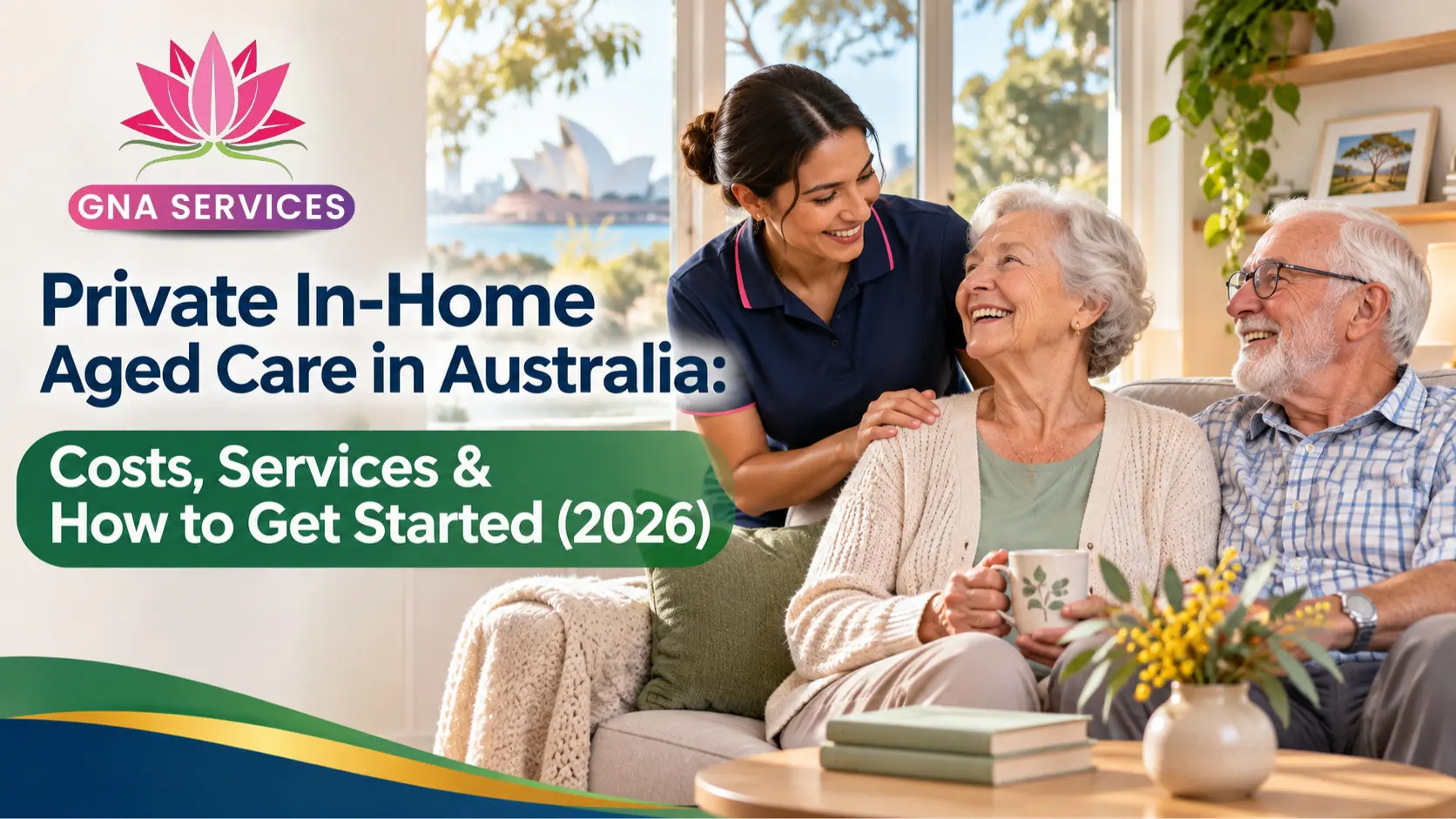
Growing older should not mean giving up the comfort, familiarity and independence of living at home. Private in-home aged care offers older Australians personalised assistance without relying on government funding. Whether you need help with everyday activities, professional nursing or additional support for an ageing parent, choosing the right aged care service provider can make everyday life more manageable.
With Australia's aged care system continuing to evolve in 2026, understanding privately funded care is increasingly important for families exploring flexible support options.
This guide explains private home care costs, available services, eligibility requirements and how to arrange appropriate assistance for yourself or a loved one.
What Is Private In-Home Aged Care?
Private in-home aged care is a self-funded arrangement that allows older people to receive professional care and assistance in their own homes without accessing government-subsidised aged care funding for those services.
Individuals or their families generally pay the provider directly for the agreed services. Unlike government-funded programs, privately funded care does not require a My Aged Care assessment before accessing support.
Depending on individual needs, services may include personal hygiene assistance, household tasks, companionship, mobility support and clinical nursing.
Furthermore, privately funded arrangements can offer greater flexibility when choosing visit schedules, service frequency and the type of assistance required.
How Does Private In-Home Aged Care Work in Australia?
Private home care operates through a fee-for-service arrangement between an individual and their chosen provider.
Generally, the process involves discussing care requirements, completing an individual care needs assessment with the provider, receiving a personalised quote and agreeing on a suitable service schedule.
Instead of waiting for government funding approval, clients can arrange assistance directly, subject to provider availability and their ability to meet the person's care needs safely.
Private in-home aged care can be arranged for short-term recovery, occasional assistance or ongoing daily support. Consequently, families can adjust their arrangements as circumstances and care requirements change.
Who Can Access Privately Funded Aged Care?
Privately funded home care is available to people who can arrange payment for the services they require and whose needs can be appropriately supported by their chosen provider.
It may be particularly suitable for:
- Older Australians who need assistance with everyday activities.
- Seniors waiting for Support at Home funding.
- Self-funded retirees seeking personalised assistance.
- Individuals who do not qualify for government-subsidised aged care.
- Seniors recovering after surgery, illness or hospitalisation.
- Families requiring additional support beyond existing funded services.
- Family carers who need temporary respite.
Private in-home aged care does not generally have government income-testing or age-based eligibility requirements. However, providers may have their own service acceptance criteria and clinical assessment requirements.
What Services Are Included in Private In-Home Aged Care?
Private home care services can be tailored to individual health requirements, personal preferences, household routines and independence goals.
1. Personal Care and Daily Living Assistance
Personal care supports older people who experience difficulties completing everyday self-care activities independently.
Services may include:
- Bathing and showering assistance.
- Dressing and grooming support.
- Toileting and continence assistance.
- Mobility support and safe transfers.
- Medication reminders.
- Eating and drinking assistance.
Respectful personal care for seniors helps maintain privacy, dignity and confidence while encouraging independence wherever possible.
2. In-Home Nursing and Clinical Care
Older people with ongoing medical conditions or complex healthcare requirements may benefit from professional nursing services at home.
Depending on clinical needs, private nursing services may include wound management, medication administration, catheter care, health monitoring, diabetes management and palliative care support.
Qualified healthcare professionals should deliver clinical services within their professional scope of practice.
Explore in-home nursing care for more information about professional clinical support.
3. Domestic Assistance and Household Support
Maintaining a clean and organised home can become more challenging with age. Domestic assistance helps seniors manage household responsibilities without unnecessary physical strain.
Common services include general cleaning, laundry, changing bed linen, grocery shopping, meal preparation and household organisation.
Regular domestic assistance for seniors can contribute to a more comfortable and manageable living environment.
4. Social Support and Companionship
Social isolation can affect an older person's emotional wellbeing. Companionship services may include friendly conversations, accompanied outings, recreational activities and assistance attending community events.
5. Respite Care for Family Carers
Private in-home aged care can provide temporary assistance while family carers attend appointments, manage personal responsibilities or take a necessary break.
Respite arrangements may range from occasional visits to more extended periods of support, depending on individual requirements and workforce availability.
How Much Does Private In-Home Aged Care Cost in Australia in 2026?
Private in-home aged care costs vary depending on the service type, location, required qualifications, visit duration and time of delivery.
There is no single national hourly rate for privately funded home care. However, published Australian private-pay pricing schedules provide useful examples for families planning their care budgets.
Private Home Care Hourly Rates in 2026
Type of care service Example standard weekday hourly rates
Domestic assistance | $85–$112.20
Personal care assistance | $98–$115
Social support and companionship | $93–$126.50
In-home respite care | $93–$112.20
Registered nursing care | $150–$165
Overnight or 24-hour care | Individual quotation required
These figures represent examples from two Australian providers, not national averages, regulated prices or Guardian Nursing Agency's service rates. Other providers may charge more or less.
Estimated Weekly Private Home Care Costs
The following examples use an illustrative hourly rate of $100 for non-clinical assistance.
Weekly support hours Estimated weekly cost
2 hours | $200
5 hours | $500
10 hours | $1,000
15 hours | $1,500
20 hours | $2,000
40 hours | $4,000
Actual expenses may differ depending on service requirements and additional charges.
What Factors Affect Private In-Home Aged Care Costs?
Several factors can influence the total cost of private in-home aged care:
- The complexity of individual care requirements.
- The number and duration of scheduled visits.
- The qualifications of support workers or nurses.
- Evening, weekend and public holiday services.
- Metropolitan, regional or remote service locations.
- Minimum booking periods.
- Travel, transport and cancellation charges.
- Clinical equipment and consumables.
Therefore, requesting a written, itemised quotation before commencing services is essential for understanding your financial commitments.
Private In-Home Aged Care vs Government-Funded Aged Care
Australia offers both privately funded and government-subsidised aged care options. Understanding the key differences between these arrangements can help seniors and their families make informed decisions based on their care needs, financial circumstances and personal preferences.
Private in-home aged care is funded directly by individuals or their families, whereas government-funded aged care is subsidised by the Australian Government, with client contributions where applicable. Additionally, private care does not require a My Aged Care assessment or government financial assessment, while government-funded services require an aged care assessment and may involve an income and assets assessment.
Furthermore, privately funded services can commence subject to provider availability, whereas government-funded care depends on assessment, approval, funding and service availability. Private home care also offers flexibility in selecting services based on individual needs and budgets. In contrast, subsidised services must align with approved care needs and program requirements.
Although private in-home aged care involves out-of-pocket expenses, individuals can purchase additional assistance as their requirements change. For some families, combining government-funded services with privately paid support may provide a practical and flexible care solution.
Understanding Australia's Support at Home Program in 2026
The Australian Government introduced the Support at Home program on 1 November 2025, replacing Home Care Packages and the Short-Term Restorative Care Programme.
Importantly, from 1 October 2026, approved personal care services under Support at Home no longer attract participant contributions when sufficient funding is available, and personal care is approved in the individual's support plan.
Meanwhile, the Commonwealth Home Support Program (CHSP) continues to provide entry-level assistance for older Australians. Its transition to Support at Home is scheduled no earlier than 1 July 2027.
However, these funding arrangements do not make privately purchased services automatically free or subsidised. Therefore, before committing to private in-home aged care, it is worthwhile exploring your eligibility for government-funded assistance through My Aged Care.
Ultimately, choosing the right care arrangement depends on your individual support requirements, affordability, preferred lifestyle and how quickly professional assistance is needed.
Can You Access Private Care Without a My Aged Care Assessment?
Yes. Australians can purchase private home care services without completing a government aged care assessment.
According to My Aged Care, individuals who do not wish to undergo an assessment can arrange privately funded services.
However, a private provider may still conduct its own care assessment to understand your health, safety, mobility and daily living requirements.
This helps establish whether the proposed services are suitable and whether additional clinical support is necessary.
Can You Arrange Private Care While Waiting for Support at Home Funding?
Yes. Private in-home aged care can help bridge the gap while an older person waits for approved government funding.
For example, an older Australian experiencing mobility difficulties may arrange privately funded personal care and domestic assistance while waiting for subsidised services to commence.
Families can subsequently review their private arrangements when government-funded support becomes available.
However, privately paid services should not be assumed to qualify for retrospective reimbursement. Confirm funding arrangements with your provider and My Aged Care before making financial commitments.
Benefits of Private In-Home Aged Care for Seniors and Families
Privately funded support offers several potential advantages for older Australians who wish to remain in familiar surroundings.
Flexible Care Arrangements
Services can be organised around personal routines, preferred visit times and changing support requirements, subject to provider availability.
Maintaining Independence
Appropriate assistance encourages older people to continue participating in everyday activities rather than unnecessarily taking over tasks they can manage themselves.
More Timely Access to Support
Private services may commence sooner because clients do not need to wait for government funding approval.
Personalised Assistance
Care arrangements can reflect individual preferences, cultural needs, health considerations and lifestyle goals.
Greater Support for Family Carers
Professional assistance can help families share caring responsibilities while maintaining their own wellbeing.
Although private in-home aged care offers flexibility, families should consider long-term affordability and regularly review whether the care remains appropriate.
How to Choose a Reliable Private Home Care Provider in Australia
Selecting a suitable private in-home aged care service provider involves more than comparing hourly prices. The quality, consistency and appropriateness of care are equally important.
Before making a decision, ask the provider the following questions:
- Are your support workers appropriately trained, screened and insured?
- Can you provide qualified nurses when clinical care is required?
- Will I receive a personalised care plan?
- What is included in the hourly service rate?
- Are there minimum visit durations or additional charges?
- How do you maintain continuity of care?
- What happens if my regular care worker is unavailable?
- How can I raise a concern or provide feedback?
- Can my services change if my care requirements increase?
- What are your cancellation and termination conditions?
For clinical services, check relevant professional qualifications and, where applicable, registration with the Australian Health Practitioner Regulation Agency (Ahpra).
Also, remember that privately funded services are not necessarily regulated under the same aged care framework as government-funded services. Understanding provider safeguards and complaint arrangements is important.
A dependable provider should communicate clearly, respect personal choices and explain service agreements before care begins.
How to Get Started With Private In-Home Aged Care
Arranging professional support at home can be straightforward when families understand the process.
Step 1: Identify Your Care Requirements
Consider which everyday activities have become difficult, whether clinical assistance is needed and how frequently professional support would be beneficial.
Step 2: Establish a Care Budget
Determine how much you can comfortably allocate towards weekly or monthly services. Consider potential changes in care needs and associated expenses.
Step 3: Contact a Suitable Provider
Discuss your requirements, preferred schedule, location and any existing government-funded services.
Step 4: Review Your Personalised Care Plan
Your provider should explain proposed services, care worker responsibilities, pricing and relevant safety arrangements.
Step 5: Confirm Your Service Agreement
Review all fees, payment arrangements, cancellation terms and service conditions before agreeing to commence care.
Step 6: Monitor and Review Your Support
Regularly discuss whether the arrangements continue to meet your needs. Request adjustments when your health, preferences or circumstances change.
Why Choose Guardian Nursing Agency (GNA Services)?
At Guardian Nursing Agency, we recognise that every person's ageing journey is different. Some older Australians require occasional household assistance, while others benefit from more regular personal or clinical support.
As an established provider of aged care, NDIS and DVA support services, GNA Services focuses on understanding individual requirements and delivering respectful, person-centred assistance.
Our private in-home aged care services include personal care, clinical nursing, domestic assistance, Support at Home, CHSP and DVA-funded support for eligible individuals.
Whether you are exploring private in-home aged care for yourself or arranging assistance for a loved one, our team can help you understand suitable service options, local availability and personalised care arrangements.
Conclusion
Private in-home aged care provides older Australians with an alternative way to access personalised assistance while remaining in the comfort of their own homes.
From everyday household tasks and personal assistance to professional nursing, privately funded services can help address changing care requirements.
Nevertheless, understanding costs, comparing providers and exploring available government funding remain essential steps. The right care arrangement should balance affordability, safety, independence and personal preferences while supporting long-term wellbeing.
Finding suitable care for yourself or an ageing loved one begins with understanding your options. At Guardian Nursing Agency, our team is here to listen, understand your circumstances and help you explore personalised support that respects your lifestyle, dignity and independence.
Whether you are considering private in-home aged care, waiting for government funding or exploring additional assistance, speak with our team about your requirements, local service availability and personalised pricing. As a dedicated aged care service provider, we are committed to helping older Australians make informed care decisions with confidence and peace of mind.