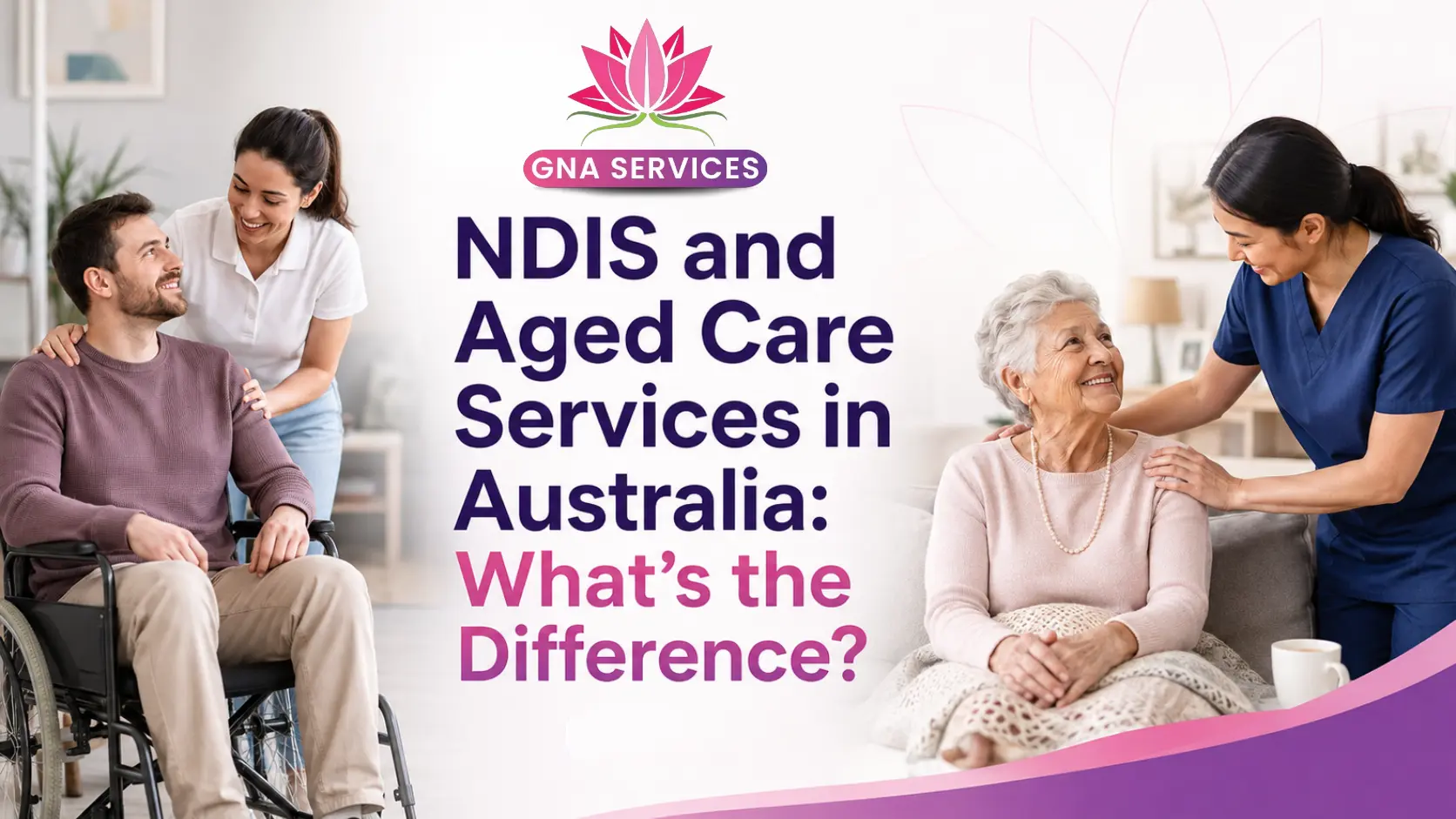
Understanding the difference between NDIS and aged care services can make it easier to choose the right support for yourself or a loved one. Although both systems can help people live safely, confidently and independently, they are designed for different groups and follow different eligibility, funding and assessment pathways. Choosing an experienced NDIS and aged care provider can also help individuals and families understand their options and organise reliable, person-centred support.
For Australian families, NDIS and aged care services provide important pathways to practical, personal and clinical assistance. However, the right pathway generally depends on a person’s age, eligibility, disability-related needs, ageing-related needs and individual circumstances.
What Are NDIS and Aged Care Services?
NDIS and aged care services are government-supported care pathways designed to help Australians with disability or age-related support needs.
The National Disability Insurance Scheme, commonly known as the NDIS, primarily supports eligible Australians with permanent and significant disability or eligible early intervention needs. Australian Government-funded aged care, on the other hand, is primarily designed to help older people who require support to remain safe, well and independent.
When people compare NDIS and aged care services, it is important to look beyond the practical tasks being provided. Both systems may offer assistance with daily activities, personal care, transport or support at home, but the reason for funding those supports is different.
NDIS funding focuses on eligible disability-related needs and goals. Aged care support generally focuses on needs associated with ageing and is determined through the aged care assessment process.
NDIS Support Services: Who Are They For?
The NDIS is designed for eligible people with disability who meet specific age, residency, disability or early intervention requirements.
Under current NDIS eligibility rules, a person must be younger than 65 on the day they apply to become an NDIS participant. Eligibility also depends on residency and disability or early intervention requirements.
For eligible participants, NDIS and aged care services can sometimes look similar because both may involve personal care, help at home and community access. However, NDIS-funded supports must relate to the participant's disability and fit within their approved funding arrangements.
Understanding how NDIS and aged care services are funded helps families avoid assuming that the same type of assistance will automatically be available through both systems.
Common NDIS Disability Supports
Depending on a participant's approved plan, goals and individual circumstances, NDIS supports may include:
- Personal care and assistance with daily living
- Community participation and social activities
- Skill development and capacity building
- Supported Independent Living (SIL)
- Accommodation-related supports
- Behaviour support
- Transport and community access
- Support for complex or catastrophic injuries
Participants have choice over the providers they work with, subject to their plan-management arrangements. For NDIA-managed funding, participants must use registered providers for the relevant NDIS supports.
Aged Care Services: Who Are They For?
Australian Government-funded aged care is generally designed for older Australians who need assistance because their ability to manage everyday activities has changed.
Government-funded aged care is generally available from age 65, although different age provisions can apply in certain circumstances, including for Aboriginal and Torres Strait Islander people and people experiencing or at risk of homelessness. Eligibility also depends on an assessment of the person's care needs.
Aged care can range from entry-level home assistance through the Commonwealth Home Support Programme to more coordinated care through the Support at Home program.
Therefore, NDIS and aged care services should not be treated as interchangeable programs, even when some of the day-to-day assistance looks similar.
Support at Home and In-Home Aged Care
The Support at Home program commenced in November 2025, replacing the former Home Care Packages Program and Short-Term Restorative Care Programme. Its purpose is to help older Australians remain independent in their own homes for longer.
Approved Support at Home services can include:
- Nursing and other clinical supports
- Occupational therapy and allied health
- Personal care and showering assistance
- Medication support
- Transport
- Respite care
- Cleaning
- Gardening
- Shopping
- Meal preparation
These supports are generally grouped into clinical supports, independence and everyday living categories.
For older Australians, comparisons between NDIS and aged care services can become particularly important when circumstances change or when families are planning longer-term support.
NDIS vs Aged Care: What Is the Main Difference?
The simplest way to understand the difference is that the NDIS is designed to support eligible disability-related needs, while aged care is designed to support eligible needs associated with ageing.
The primary purpose of the NDIS is to help eligible people with disability build independence, participate in their communities and work towards individual goals. By contrast, aged care is intended to help older Australians maintain safety, wellbeing and independence as their care needs change with age.
Age requirements are also different. A new NDIS applicant must generally be under 65 when applying, while government-funded aged care is usually intended for people aged 65 and over, subject to eligibility and assessment requirements.
The eligibility process also differs between the two systems. NDIS access is based on specific age, residency, disability and early intervention criteria. Aged care access is generally determined through an aged care assessment that considers the person’s health, daily living abilities and level of support required.
Funding arrangements are another important distinction. NDIS funding is based on approved disability-related supports and individual goals, whereas aged care funding is based on assessed care needs and the aged care program a person is eligible to receive.
The types of assistance can sometimes overlap. NDIS participants may receive support with daily living, community access, skill development, capacity building or Supported Independent Living. Older Australians may receive personal care, nursing, domestic assistance, transport, respite and other home-based supports.
Therefore, although NDIS and aged care services may provide similar practical assistance in some situations, their purpose, eligibility rules, funding pathways and intended outcomes are different.
Can You Receive NDIS and Aged Care Services at the Same Time?
Generally, a person cannot receive NDIS supports and Australian Government-funded in-home aged care at the same time.
For example, someone who became an NDIS participant before turning 65 may generally choose to continue receiving NDIS supports after they turn 65. However, they cannot simultaneously receive NDIS supports and government-funded aged care services such as Support at Home or the Commonwealth Home Support Programme.
This is one of the most important aspects of NDIS and aged care services for individuals and families planning long-term care.
Before changing support systems, it is important to understand how the transition could affect existing services, funding, care workers and established support arrangements.
What Happens to NDIS Support After Age 65?
Turning 65 does not automatically mean that an existing NDIS participant must leave the scheme.
If a person became an NDIS participant before their 65th birthday, they can generally choose to remain with the NDIS after turning 65. However, someone who is already 65 or older when applying cannot become a new NDIS participant under the current age requirements.
Instead, an older person who is not already an NDIS participant may need to explore government-funded aged care or other mainstream support services.
For families comparing NDIS and aged care services around this age milestone, early planning can make the available options easier to understand and may support a smoother transition between care arrangements.
What Types of Support Can Both Systems Provide?
When comparing NDIS and aged care services, families often notice overlap in the types of day-to-day outcomes they are designed to support.
Although the funding reasons are different, both systems may help people with personal care, mobility, transport, household routines, social connection and maintaining greater independence.
Personal Care and Daily Living Assistance
Personal care can include help with showering, dressing, grooming, toileting, mobility and other everyday routines.
However, the relevant funding pathway depends on why assistance is required, the person's eligibility and the support approved under their plan or aged care assessment.
Community Access and Transport Support
NDIS participants may receive disability-related community participation or transport support where these supports meet the applicable funding requirements.
Older Australians may also access eligible transport, community access or social support through aged care programs.
The common goal is to help people remain connected to their community while maintaining as much independence as possible.
Nursing and Clinical Care at Home
Clinical support can be particularly important for older Australians who need professional nursing or allied health services while remaining at home.
The Support at Home program includes clinical services such as nursing, occupational therapy and physiotherapy among the supports that may be available to eligible older Australians.
NDIS participants with disability-related complex support needs may also receive relevant supports according to their approved NDIS funding and individual circumstances.
How Do You Know Which Support System Is Right for You?
To decide between NDIS and aged care services, start by identifying the main reason support is required.
If a person's needs relate to permanent disability or eligible early intervention needs and they meet the NDIS requirements, the NDIS may be the appropriate pathway.
However, if the primary concern is age-related decline, personal care, domestic assistance, clinical support or maintaining independence as an older person, My Aged Care may be the more suitable starting point.
When comparing NDIS and aged care services, consider:
- The person's age
- Current eligibility
- Whether support needs are primarily disability-related or ageing-related
- How much daily assistance is required
- Whether personal or clinical care is needed
- Individual goals and preferences
- Preferred living arrangements
- Existing NDIS or aged care approvals
- The level of informal family or carer support available
Importantly, eligibility and funding decisions are made by the relevant government agencies rather than individual service providers.
Choosing NDIS and Aged Care Services in WA and NSW
For individuals and families across Western Australia and New South Wales, choosing NDIS and aged care services should involve more than simply comparing a list of available tasks.
Consider whether a provider demonstrates clear communication, person-centred planning, reliable service delivery, appropriate worker screening, trained support workers and an understanding of the relevant disability or aged care system.
A suitable NDIS and aged care provider should also listen to the person's goals, preferences, routines, culture and lifestyle instead of delivering a one-size-fits-all model of care.
A provider that understands both NDIS and aged care services can be particularly helpful for families whose support needs change over time. However, responsible providers should explain service options clearly without promising government funding or eligibility approval.
Guardian Nursing Agency, also known as GNA Services, supports NDIS participants, older Australians, veterans, families, carers and referrers with disability and home-based support services across Western Australia and New South Wales.
GNA Services provides support options that include NDIS personal care and daily living assistance, community participation, skill development, Supported Independent Living, behaviour support and catastrophic injury support, alongside Support at Home, personal care, clinical care, CHSP, DVA support and domestic assistance.
Why Person-Centred Care Matters?
Regardless of which support pathway applies, quality care should be built around the individual.
Person-centred care means considering what matters to the person, including their independence, dignity, choices, routines, relationships, community connections and personal goals.
For an NDIS participant, this may involve developing daily living skills, increasing community participation or building greater independence.
For an older Australian, it may involve receiving personal care, domestic assistance or clinical support while remaining safely at home.
Therefore, good care is not simply about completing tasks. It should help people maintain choice, confidence and quality of life.
Finding the right care pathway can be easier when you have clear information and personalised support. Guardian Nursing Agency (GNA Services) provides disability, aged care and DVA support services across Western Australia and New South Wales, including personal care, daily living assistance, community participation, Supported Independent Living, clinical care, Support at Home and other home-based supports. If you or a loved one is exploring NDIS and aged care services in WA or NSW, contact us to discuss your individual support needs with an experienced NDIS and aged care provider.