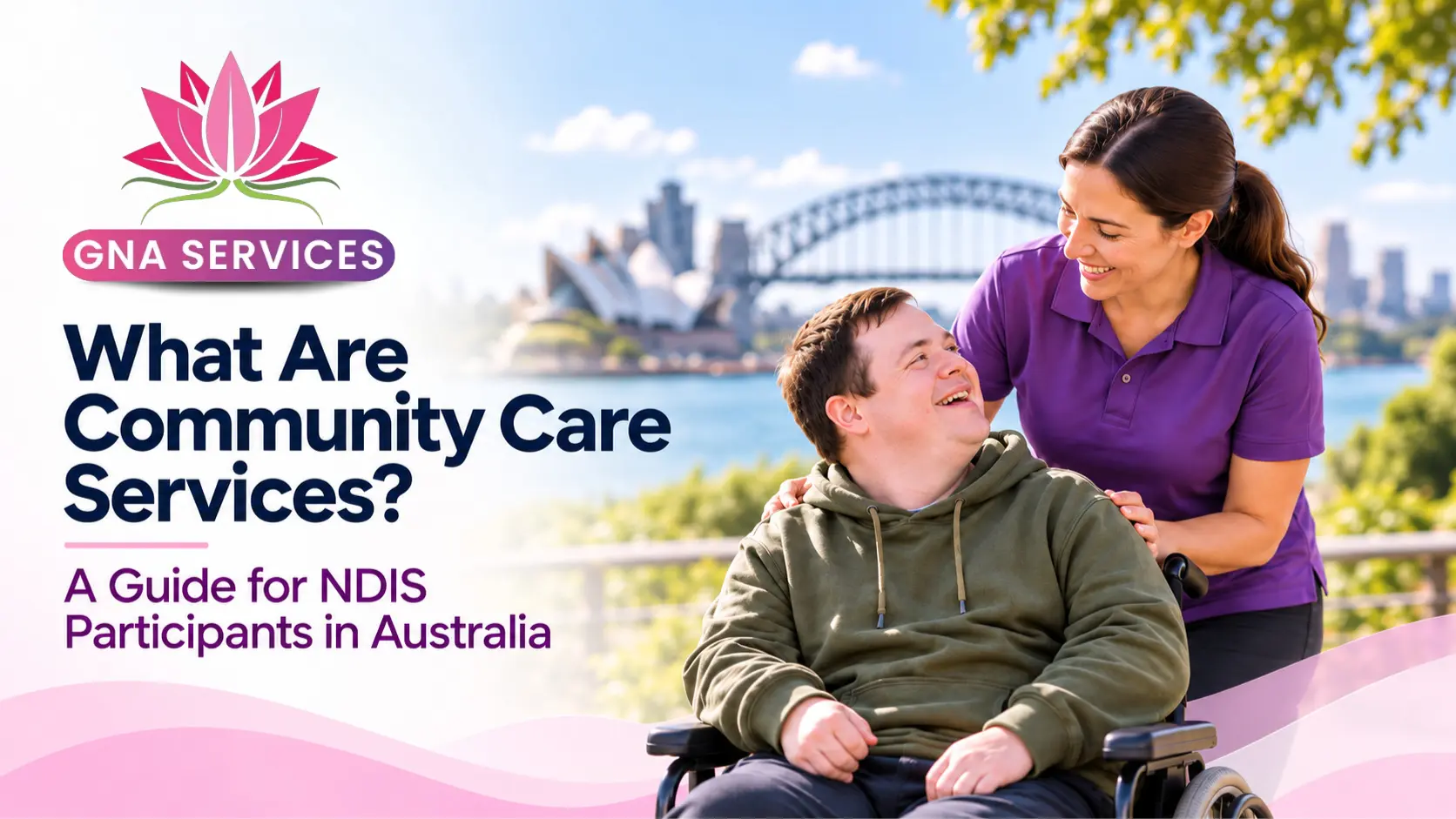
For many Australians living with disability, staying connected to the community is an important part of living with greater choice, confidence and independence. Community care services can provide practical, social and capacity-building support based on a person’s needs and goals. For NDIS participants, working with the right NDIS support provider can also make it easier to understand which supports may fit within an NDIS plan and how those supports can help with everyday life, relationships and community participation.
What Are Community Care Services?
Community care services are supports delivered in a person’s home or local community to help them take part in everyday activities, connect with other people and work towards greater independence. Depending on individual needs, support may involve assistance with community access, shopping, appointments, social activities, recreation, daily tasks or skill development.
For NDIS participants, it is important to understand that “community care” is a broad everyday term rather than a single official NDIS support category. The NDIS uses specific categories and descriptions, including Assistance with Social and Community Participation and Increased Social and Community Participation. These supports can help eligible participants engage in community activities, develop skills and work towards goals included in their plans.
How Do Community Care Services Relate to the NDIS?
Under the NDIS, funded supports must relate to the participant’s disability, goals and plan, and they must meet the rules for NDIS supports. Community care services may therefore overlap with several types of funded assistance, depending on the participant’s circumstances.
For example, the NDIS states that Assistance with Social and Community Participation within Core Supports can help participants spend more time in their local community and take part in group or social activities. Capacity Building funding may also include Increased Social and Community Participation, which can help participants find and join activities, build skills and connect with people in their area.
However, funding is individual. A service that is suitable for one participant may not be funded in the same way for another. Before using NDIS funds, participants should check their current plan, support categories and applicable NDIS rules.
What Can Community-Based Disability Support Include?
The exact mix of community care services should reflect the participant rather than follow a one-size-fits-all program. Good support starts with understanding what matters to the person, where they want to go and what they want to become more confident doing.
Social and Community Participation
A support worker may assist a participant to attend social groups, community events, sporting activities, hobby groups, recreational programs or other activities that match their interests. The goal is not simply to “get out of the house”, but to support meaningful participation and connection.
NDIS research has linked social and community participation with benefits such as a stronger sense of belonging, deeper relationships, larger social networks, reduced isolation and greater confidence. Individualised support can also help address barriers that make community participation more difficult.
Community Access and Appointments
Community care services may include disability-related assistance to access local places and activities. Depending on a participant’s plan and needs, this could involve support to go shopping, attend an appointment, visit a community centre or take part in an organised activity.
The NDIS also notes that support workers may help with everyday activities such as shopping or transport and can support participants to build confidence when accessing the community.
Building Everyday Skills and Independence
Some participants want more than assistance completing an activity. They want to build the skills to do more for themselves over time. In these situations, community-based support can focus on confidence, decision-making, communication, planning, travel skills or other practical abilities linked to the participant’s goals.
As a result, community care services can be valuable not only for immediate assistance but also for developing capacity and greater independence.
What Are the Benefits of Community Care Services for NDIS Participants?
The most useful community care services are person-centred and goal-focused. Rather than deciding what a participant should do, support should help the person make choices and participate in ways that are meaningful to them.
Potential benefits can include greater confidence in public and social settings, increased independence with everyday activities, opportunities to make social connections, improved community access and more confidence trying new experiences.
For someone who has experienced isolation, community participation can also create opportunities to develop relationships and a stronger sense of belonging. For another participant, the priority might be learning to use public transport, joining a local sports group or becoming more comfortable attending appointments.
Therefore, the value of support depends on how well it reflects the participant’s own goals.
Are Community Care Services Covered by NDIS Funding?
Some community care services may be funded by the NDIS when they meet the NDIS funding rules and are included within the participant’s plan or relevant support budget. However, having an NDIS plan does not mean every community activity or everyday cost will automatically be covered.
For example, funding may cover disability-related support from a worker to help a participant engage in an eligible community activity. Ordinary personal expenses, such as items or costs that everyone would normally pay for themselves, may not be NDIS-funded simply because a participant receives support while doing the activity.
Because NDIS plans and funding arrangements differ, participants should confirm what their funding can be used for before booking services or incurring costs.
Core Supports and Capacity Building for Community Participation
Understanding the difference between support budgets can make community care services easier to navigate.
Core Supports can include Assistance with Social and Community Participation where funding is available. This can help with the support a participant needs to engage in community, social or group activities. Core funding also has flexibility rules, although spending must still comply with NDIS requirements and the participant’s plan.
Capacity Building Supports can include Increased Social and Community Participation. This category is designed to help participants build skills and increase their ability to participate in community life. For example, support might help someone discover suitable local activities, develop social confidence or become more independent when taking part.
Because funding structures can change, participants should rely on their current plan and up-to-date NDIS guidance when making decisions.
How Can Community Care Services Support NDIS Goals?
NDIS goals are personal, so community care services should be tailored accordingly. A participant might want to become more independent, improve communication, expand their social network, participate in recreation or feel more confident travelling in the community.
For example, someone whose goal is greater independence may work with a support worker to plan a shopping trip, make a list, travel to the shops and complete purchases with the right level of assistance. Another participant may want support to join a community group and gradually become comfortable attending more independently.
This goal-based approach makes the support purposeful. It also helps participants, families and providers understand what progress may look like in everyday life.
How to Choose a Community Care Services Provider?
Choosing a provider is about more than finding someone who has availability. Participants should look at whether the provider listens, understands their goals and can deliver consistent support in a way that respects choice and control.
A suitable provider should explain community care services clearly, discuss how support can be personalised, communicate openly about service agreements and costs, and help participants understand how the proposed support relates to their plan. It is also worth asking how support workers are matched to participants and what processes are used to maintain safety, quality and continuity.
Most importantly, community care services should feel collaborative. Participants should be involved in decisions about what they do, when support is provided and how their goals are pursued.
Why Person-Centred Community Support Matters?
Community participation is different for everyone. One person may value sport and outdoor recreation, while another may prefer art, volunteering, social groups, local events or simply becoming more confident with everyday community access.
For this reason, effective community care services should start with the individual. NDIS research has also highlighted person-centred planning, individualised support and assistance to identify suitable activities as approaches that can enable meaningful community participation.
When support reflects a participant’s preferences, strengths and aspirations, community engagement can become more than an appointment on a roster. Instead, it can become part of building a more connected and self-directed life.
What Should You Ask Before Choosing Community Support?
Before selecting a provider, consider whether the organisation understands your goals and can offer support that fits your lifestyle rather than expecting you to fit into a standard program.
Useful areas to discuss include the type of assistance you need, preferred days and times, interests, cultural or communication preferences, support-worker matching, service agreements, costs and what happens if your circumstances change.
You may also want to discuss how progress towards your goals will be reviewed. Ultimately, effective community care services should evolve with the participant instead of remaining fixed when their confidence, abilities or priorities change.
Community Care Services That Put Your Goals First
The best community care services are built around the participant’s choices, interests and goals. Whether the priority is meeting new people, attending community activities, developing everyday skills or becoming more independent outside the home, support should help create meaningful progress at the participant’s own pace.
For NDIS participants, understanding the difference between general community support and specific NDIS-funded supports is equally important. Clear information, individualised planning and a suitable provider relationship can help participants and families make more confident decisions about the support they choose.
If you are looking for community care services that support independence, community access and meaningful participation, Guardian Nursing Agency can discuss your needs, goals and available supports with you. As an NDIS support provider, Guardian Nursing Agency offers NDIS supports including community participation, personal care, skill development and other disability support services. Contact us to discuss how personalised support may fit your circumstances and NDIS plan.