13-Mar-2026
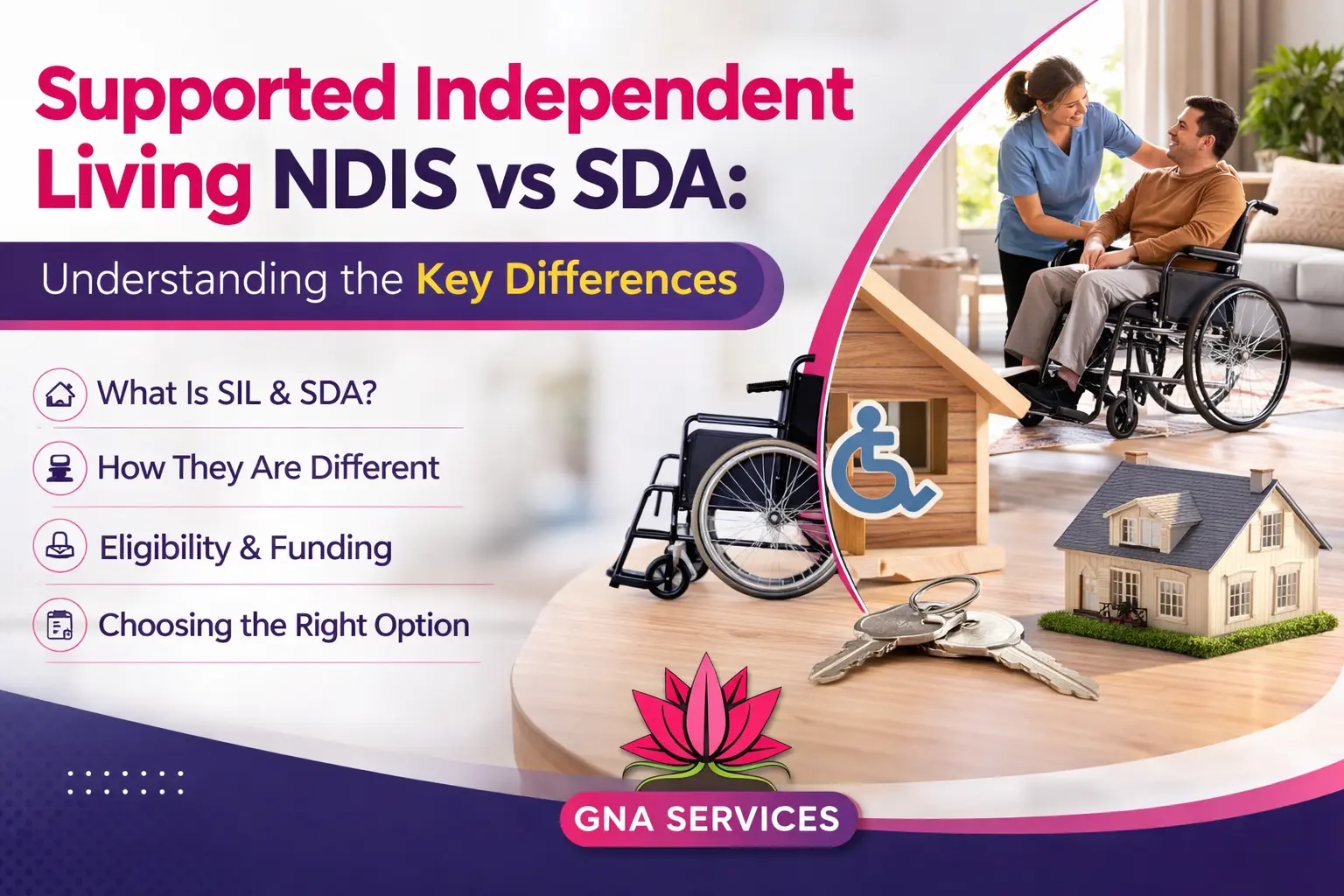
Supported Independent Living NDIS vs SDA: Understanding the Key Differences
Understanding the difference between SIL and SDA is essential for participants navigating NDIS Support Services and choosing the right living arrangement. At GNA Services, we provide personalised care through our professional support programs, helping individuals achieve greater independence and a better quality of life.
Choosing the right housing and support option through the NDIS can be challenging for many participants and families. Two commonly discussed options are Supported Independent Living and Specialist Disability Accommodation (SDA). While both relate to disability housing and support services, they serve very different purposes within the NDIS framework. Understanding how these supports work can help participants make informed decisions about their living arrangements and long-term independence.
In this guide, we explain the differences between Supported Independent Living NDIS and SDA, how each support works, and how participants can determine which option best suits their needs.
What Is Supported Independent Living NDIS?
Supported Independent Living NDIS is a type of funded support designed to help people with disabilities live more independently while receiving assistance with everyday tasks. These supports are usually delivered in shared living environments where participants receive help from trained support workers.
The main purpose of Supported Independent Living NDIS is to assist participants in developing practical life skills while ensuring they receive the support required to manage daily activities safely.
Typical supports included in these arrangements may include:
Assistance with personal care and hygiene
Help with cooking and meal preparation
Household tasks such as cleaning and laundry
Medication reminders and health monitoring
Skill development for independent living
Through Supported Independent Living NDIS, participants are encouraged to build independence while still having access to consistent professional support.
What Is Specialist Disability Accommodation (SDA)?
Specialist Disability Accommodation, commonly known as SDA, refers to purpose-built housing designed for people with significant physical impairments or very high support needs. Unlike daily support services, SDA funding focuses on the physical design and accessibility of the home itself.
SDA homes are developed with features that improve safety and accessibility, including:
Wheelchair-friendly layouts
Wider doorways and accessible bathrooms
Reinforced structures for additional safety
Assistive technology integration
Smart home systems to improve independence
While SDA provides the specialised housing environment, participants living in these homes may still receive Supported Independent Living NDIS assistance for their day-to-day support needs.
Key Differences Between Supported Independent Living NDIS and SDA
Although these two supports are often discussed together, they serve very different roles in the NDIS system. Understanding these differences helps participants select the most appropriate option.
Purpose of the Support
Supported Independent Living NDIS focuses on providing daily assistance that helps participants manage everyday tasks and build independence.
SDA focuses on the type of housing environment, ensuring the property itself meets accessibility and safety requirements.
Type of Funding
Funding under Supported Independent Living NDIS covers the cost of support workers who assist participants with daily living activities.
SDA funding covers the design and infrastructure of specialised disability housing, not the support services provided within the home.
Level of Support Required
Participants receiving Supported Independent Living NDIS usually require regular assistance throughout the day or night.
SDA is generally approved for participants with very high physical support needs or complex mobility challenges.
Living Arrangements
Many participants who receive Supported Independent Living NDIS live in shared homes with other individuals who also receive support services.
SDA homes can be shared or individual housing, but the key feature is the specialised design that supports accessibility and safety.
Understanding the difference between SIL and SDA is essential for participants exploring suitable living arrangements and accessing the right Community Care Services. At GNA Services, we deliver personalised support programs designed to promote independence, enhance daily living, and improve overall quality of life.
How Supported Independent Living Works Alongside SDA?
In many situations, these two supports work together rather than replacing one another.
For example, a participant may live in an SDA property that provides accessible housing while receiving Supported Independent Living NDIS services for daily assistance.
This combination allows participants to benefit from both accessible housing and consistent personal support.
Working with a trusted provider offering NDIS services in Perth can help you navigate SIL and SDA options with confidence and clarity.
Who Can Access Supported Independent Living NDIS?
Eligibility for Supported Independent Living NDIS depends on an individual’s support needs and goals within their NDIS plan.
Participants may qualify for this support if they:
Require frequent assistance with daily tasks
Need support workers throughout the day or overnight
Want to develop independent living skills
Prefer living in a supported shared environment
Each participant’s needs are assessed individually to determine whether Supported Independent Living NDIS is the most suitable option.
Benefits of Supported Independent Living for Participants
Choosing a supported living arrangement can provide several benefits for individuals seeking greater independence.
Improved Independence
Participants can live in a supportive environment while maintaining control over their routines and personal choices.
Personalised Care and Support
Support services are tailored to each participant’s needs, ensuring they receive the right level of assistance.
Skill Development Opportunities
Participants can learn practical skills such as cooking, budgeting, and managing household tasks.
Community Engagement
Many supported living arrangements encourage participants to take part in community activities and build social connections.
Through Supported Independent Living NDIS, individuals can experience both independence and reliable support.
Choosing the Right Housing and Support Option
Selecting the right support arrangement often depends on several factors, including physical needs, accessibility requirements, and long-term living goals.
Participants should consider:
Their daily support needs
Whether accessible housing features are required
Preferred living arrangements
Long-term independence objectives
A qualified support provider can help participants explore available options and determine whether Supported Independent Living NDIS, SDA, or a combination of both may be suitable.
Supported Independent Living Services in Western Australia and NSW
Participants across Western Australia and New South Wales rely on professional disability support services to help them live safely and independently.
Experienced support providers offer personalised plans that align with NDIS goals, ensuring participants receive high-quality assistance with daily living, community participation, and life skill development.
Reliable Supported Independent Living NDIS services play an important role in empowering participants to build confidence, independence, and a better quality of life.
If you or a loved one is exploring housing and support options, Guardian Nursing Agency (GNA Services) provides compassionate disability support services across Western Australia and New South Wales. The team offers personalised care planning, experienced support workers, and reliable assistance designed to help participants achieve their independence goals. With professional support and dedicated care, participants can confidently access high-quality Supported Independent Living services that promote safety, independence, and well-being. Contact Guardian Nursing Agency today to learn more about available support services and how the team can assist with your independent living journey.
Related Articles:
NDIS Support Providers in Perth: Everything Participants Need to Know in 2026
What Are Disability Support Services? A Complete Guide for NDIS Participants in Australia
NDIS Services Perth: How Support Workers Improve Daily Living for NDIS Participants?
Complete Guide to Aged Care in Sydney: Eligibility, Services & How It Works? (2026)
Aged Care in Melbourne: How to Choose a Reliable Provider & Get the Best Support (2026)